Co-founder of Make (Good) Trouble, Tayler is responsible for creating and developing editorial, radio and podcast projects as well as and heading up our research and evaluation offer. Tayler is our Deputy Child Protection/Safeguarding Lead.

If you’d asked us 18 months ago what 2025 had in store, we’re not sure we’d have guessed quite this ride. It’s been one of the toughest years financially in Make (Good) Trouble’s history – funding commissions have been harder to come by, budgets have been squeezed, and like so many small organisations in our sector, we’ve had to make difficult decisions along the way.

And yet. It’s also been one of the most rewarding. We recently put together our C.I.C (Community Interest Company) annual report and I thought it merited a blog post as it got me thinking about what we do…

Why this work matters more than ever

Today’s young people are growing up under pressures that would have felt unimaginable a generation ago. A major independent review into youth mental health, ADHD and autism, that’s due to be published soon, is to push back on the idea that this is a “snowflake generation,” with its lead author, Professor Peter Fonagy, telling the BBC there has been a real rise in mental distress among children and young people – anxiety, depression, self-harm and eating disorders chief among them. NHS figures back this up starkly: the number of children and young people in contact with mental health services in England has risen by 50% in the past five years, and one in three of those referred are still waiting for help a year later. (This probably isn’t news to parents reading this.)

Fonagy pointed to economic and employment uncertainty, social media pressures, and – tellingly – cuts to youth services over the past decade, which have left young people with fewer places to simply mix, belong and participate. As he put it, “participating in things… maintains good mental health.” SEND provision is under real strain amid ongoing reform, too, and many young people are struggling simply to find a foothold in the world of work, with employers increasingly reporting gaps in confidence, communication and interview readiness among school and college leavers.

(It’s well worth reading the government’s Young people and work: interim report on this issue.) 

It’s against this backdrop that our work feels so important. We don’t just talk about building young people’s confidence and skills – we do it, one workshop, one interview, one podcast, one film at a time. Every session is, in its own small way, exactly the kind of participation Fonagy describes: a place to belong, contribute and be heard.

How we support young people’s confidence and mental health

In 2025, we helped train future NHS therapists by working with young people, at The Horsfall with the charity 42nd Street in Manchester, to turn their own lived experience – navigating services, being labelled “high risk,” growing up in the system – into training films that will shape how the next generation of therapists talk to and support young people.

We ran our Holiday Drama Club in Friston Forest for the fifth year running, with the brilliant drama therapist Rozzy from Dragon Drama, giving teenagers a safe, supported space to build confidence outdoors. As one parent told us, their son had come a long way since first joining aged nine while struggling with ADHD/ASD, past trauma and medical issues, and the club had become “one of his safe places” – somewhere “they understand me.”
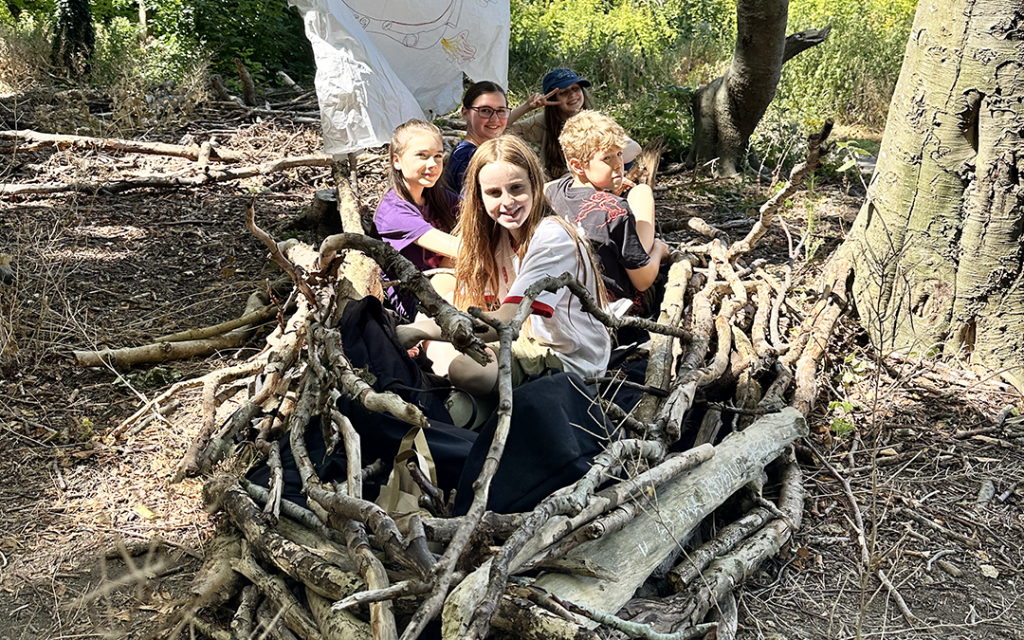
Young people in their boat built from sticks at the Make (Good) Trouble and Dragon Drama Holiday Club in Friston Forest, East Sussex

Young people taking part in Make (Good) Trouble’s Holiday Drama Club in Friston Forest, East Sussex, in partnership with Dragon Drama

We took Barking & Dagenham and Islington’s Youth Ambassadors through media training with The Ben Kinsella Trust, put Wakehurst work experience students behind a microphone for the third summer running, and helped young people across East Sussex tell their own stories about loss, bullying and social media pressures through a series of school mental health films.
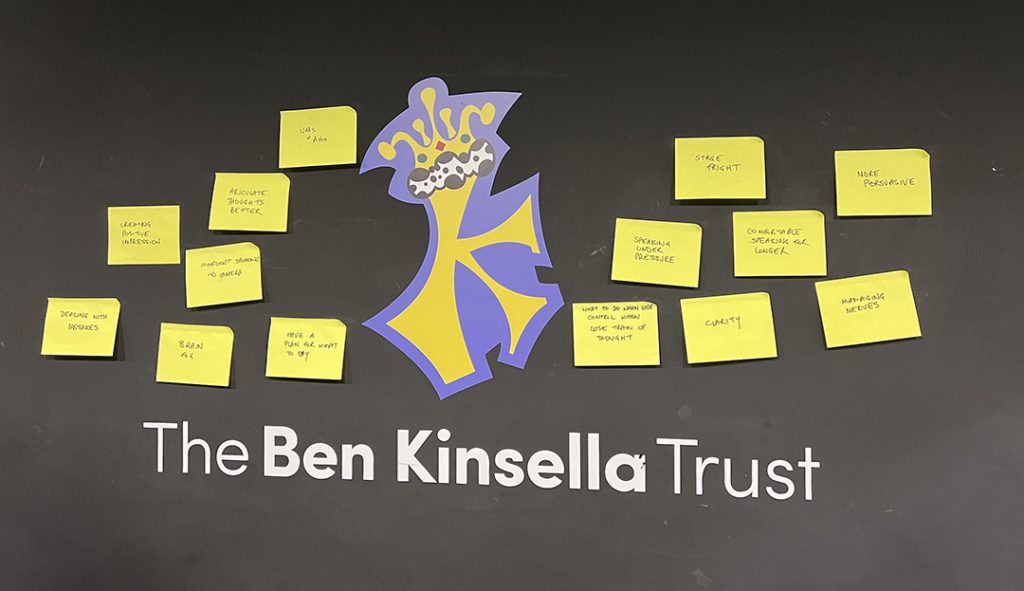
Make (Good) Trouble's workshop wall at Ben Kinsella Trust with post-its showing participant's goals for media training workshop including 'clarity', 'stage fright' and 'speaking under pressure'.

Workshop at The Ben Kinsella Trust where the charity’s ambassadors write their personal goals for the Make (Good) Trouble Media Training session.

Why we love this work

Working with young people is a joy. Their creativity is infectious, their energy keeps us on our toes, and what they bring to our projects through co-creation is genuinely inspiring. When we hand young people the microphone – literally and figuratively – and let them shape the questions, the themes, the stories, we get work that adult-led projects simply couldn’t produce.

We think more organisations should be doing this. Not consulting young people as an afterthought but building them into projects from day one as producers, interviewers and storytellers in their own right. It’s harder work. It’s also so much better. (Want to work with us to do this? Get in touch!)
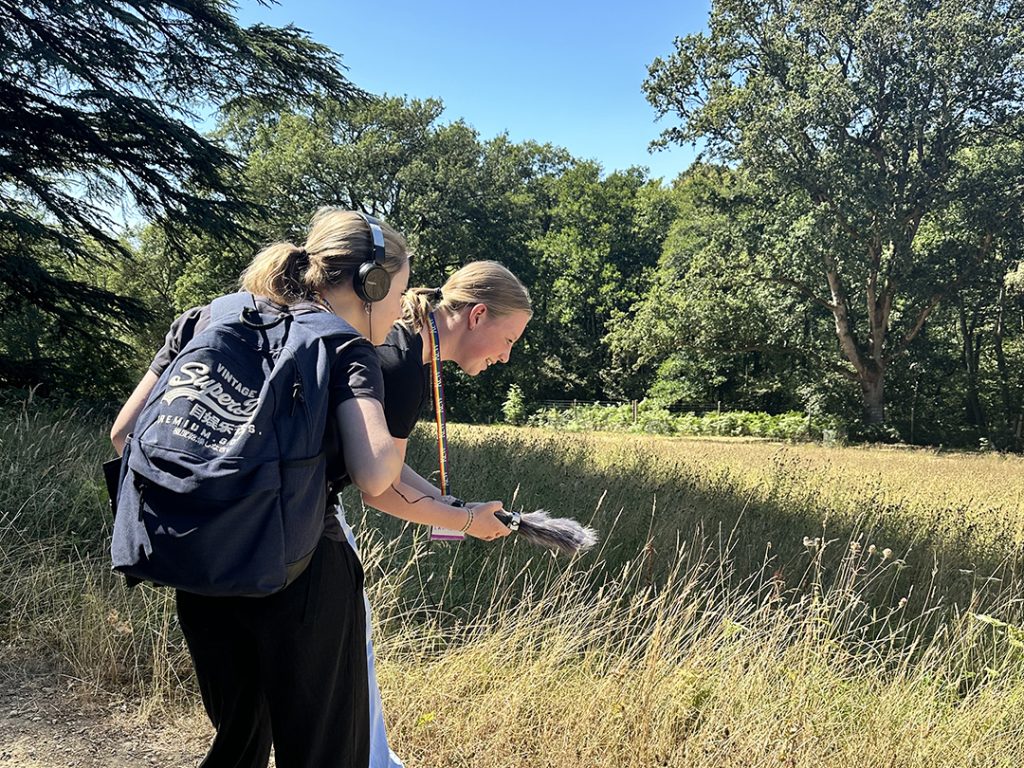
Young work experience students at Wakehurst recording sound effects for a podcast about their time at the botanic garden.

Onwards

To every parent, commissioner, school, charity and partner who’s worked with us over the years – thank you. It hasn’t always been easy, but seeing a nervous 14-year-old walk out of a workshop standing taller, speaking louder, and believing in themselves a bit more? That’s why we do this. Here’s to more good trouble in the future.

About Make (Good) Trouble

Make (Good) Trouble is a Community Interest Company (CIC) working alongside young people to challenge the status quo and spark real change. Through creative workshops, media training and co-produced content – from podcasts to policy – we help young people build confidence, develop communication skills and tell their own stories, shaping the systems that affect them and leading the change they want to see. We work with schools, youth clubs, local authorities, the NHS and charities across Sussex and beyond, supporting young people through some of the toughest challenges they face. Find out more at makegoodtrouble.co.uk.
For the last three summers, we’ve packed up our microphones and headed to Wakehurst – part of the Royal Botanic Gardens, Kew, tucked into the Sussex countryside – to spend a day with their Work Experience students. Our job: help them turn a week of hands-on learning into a podcast. Their job: tell us what it’s like to work, for real, for the first time.

Every year, we come away thinking the same thing. Good work experience isn’t a box to tick. Done properly, it’s one of the most valuable weeks a young person can have.

What is a Make (Good) Trouble workshop?

A Make (Good) Trouble workshop is a one-day podcast and storytelling session that helps young people on work experience placements make sense of what they’ve learned, build confidence in talking about their own achievements, and come away with a polished podcast episode and a written piece for their CV. We work with schools, charities and employers running work experience placements for 14–18 year olds, and we’d love to bring it to yours – get in touch to find out more. (We also run other kinds of creative workshops

The stuff school doesn’t teach you

You can learn a lot in a classroom. But nobody hands you a worksheet on how to introduce yourself to a room full of strangers, how to keep your cool when forty excited children are all asking questions at once, or how to pitch your own idea for a social media post and then see it go live.

That’s the gap Wakehurst’s work experience programme fills – and it’s why we love working with them.

Take Swasti, who worked with the visitor experience and commercial team: “At the beginning of the week, I was actually quite nervous… but as the week went by and I started looking at the other staff and how they do everything, now I feel a lot more confident to talk to people.” By the end of the week, she was guiding visitors around the site and running the till in the plant centre – real responsibility, not busywork.

Or Arthur, who spent his week in marketing and communications: “It gave me a brilliant sense of what the working environment here at Wakehurst is… my favourite part was creating social media posts because I got to go outside, look at it, do the research, and then put together, completely on my own, a social media post.”Knowing his work would be published – on Wakehurst’s Instagram and Facebook – gave him, in his words, “a sense of achievement.”

That’s the difference between shadowing someone and doing the job. Wakehurst trusts these young people with genuine tasks and ownership, and it shows in how they talk about their week.

Confidence, teamwork, and finding your voice

Ask any employer what they wish young candidates arrived with, and “confidence to contribute” will be near the top of the list. It’s also one of the hardest things to teach – you can’t fake your way into it. You have to be given the chance to practise it.

Charlotte, who worked in the learning department, ended up doing far more than she expected: “At the start of the week, I was definitely expecting to play a small role… however, I actually played a much bigger role when I was with some teachers. I even helped to teach some lessons, and I added a lot of extra information that I think was useful.” She wasn’t just tolerated – she was genuinely useful, wrangling school groups, transporting equipment, and even fielding a memorable case of mistaken identity during pond dipping (turns out excited eight-year-olds are very keen for a newt to be an axolotl).

Holly, working with the Marcoms team, put her finger on something we hear every year: “Everyone that works here… speaks well of what they do and loves what they do and is really passionate about it. It really rubs off on you.” Being surrounded by people who genuinely enjoy their jobs is its own kind of education – one no textbook can offer.

The nature effect

There’s another ingredient that makes Wakehurst’s placements stand out: it’s all happening outdoors, in one of the most beautiful landscapes in the country.

Sammy, who worked in the learning department, put it simply: “It’s made me feel happier just being outside quite a lot and quite at peace with the world… it’s helped improve my well-being.” Hannah, who worked in the Millennium Seed Bank, described how the experience shifted her whole perspective: “You can get a bit caught up in climate anxiety, but actually to be able to do something so hands-on and impactful… it’s made me feel really inspired that there are things that I can do.”

Abby, who spent her week in the seed bank’s lab, felt the same connection deepen: “After spending time with all the seeds and learning about how many species of plant are actually so critically endangered, I feel a lot more connected to the plants around me… it makes me feel like I need to do more work to protect the environment.”

This is where the real magic happens – young people don’t just leave with a stronger CV. They leave as genuine advocates for conservation, carrying Wakehurst’s mission with them long after the week ends.

Wakehurst work experience students  recording sound effects - a buzzing bee - in the botanic garden

Work Experience students recording the sound of a bee at Wakehurst.

From placement to podcast

Our role is to help capture all of this before it fades. On the final day of each placement, we run a one-day workshop designed to help students make sense of what they’ve just experienced. We start with interview techniques training and show them how to use recording equipment, then the group spends the day interviewing each other, describing their week, and gathering sound effects from the gardens to build a real aural picture of their placement.

The result is two things: a podcast that gives listeners a genuine feel for life as a work experience student at Wakehurst – across horticulture, retail, education, marketing and the Millennium Seed Bank – and a written piece they can put straight on their CV.

It’s also, often, the first time these young people have been asked to reflect properly on their own work and articulate what they’ve learned. That skill – being able to talk confidently about your own experience – is one that will serve them in every job interview they ever do.

As Hannah put it, thinking back to reapplying after being unsuccessful the first time: “I think keep going if it’s something that you think you’ll enjoy. It’s worth it.”

Listen for yourself

Evergreen Appreciation – by Abi, Charlotte, Swasti, Arthur and Sammy, with additional sound effects by Ellen 🎧 Listen on SoundCloud

Germination, Communication and Everything in Between – by Holly, Sophia, Hannah and Lauren 🎧Listen on SoundCloud

Why this matters right now

We believe strongly in helping young people onto the work ladder – responsibly, and with real substance behind it. That matters more than ever. Entry-level jobs are getting harder to come by, and for a lot of young people, a well-run work placement is the only chance they get to find out what a workplace feels like before they’re expected to walk into one for good.

Wakehurst’s approach shows what’s possible when an organisation takes that responsibility seriously: real tasks, trust, and reflection at the end of it. The result is a group of confident, articulate ambassadors – for Wakehurst, for conservation, and for the idea that young people deserve to be taken seriously at work.

FAQs about our work experience workshops

How long is a Make (Good) Trouble workshop?

It’s a one-day workshop, usually run on the final day of a work experience placement, so students can reflect on the whole week while it’s fresh.

What age group is it suitable for?

We usually work with young people aged 14–19, matching the age range of most school and organisational work experience placements.

What do students come away with?

A finished podcast episode, a written piece they can add straight to their CV, and practical interview, communication and storytelling skills they’ll use in future job applications.

Do students need any experience with audio or podcasting?

None at all. We start from scratch with interview techniques training and how to use the recording equipment, so no prior experience is needed.

Can we run this alongside our own work experience programme?

Yes, the workshop is designed to sit on top of an existing placement, whatever the sector, to help students process and articulate what they’ve learned.

Get in touch

If you’re interested in us augmenting your organisation’s work placements with a Make (Good) Trouble workshop, get in touch.

Wakehurst work placements are open to young people aged 14–18. Contact wakehurstworkexperience@kew.org for information on how to apply.

Read time: 4 minutes

Emma Warren’s Up the Youth Club: Illuminating a Hidden History traces over 100 years of UK youth club history through the people who built them. It’s an important read for anyone who lives, works, or volunteers with young people – and it resonates deeply with what we do at Make (Good) Trouble.

Warren writes with warmth, love and humour (and sometimes with understandable anger) about the most valuable of spaces – the youth club. Her style is accessible and engaging, never academic or dry, even when the subject matter centres on funding cuts, closures or decades of undervaluing youth work.

Why this book is important to Make (Good) Trouble

At Make (Good) Trouble, our goal is to create safe spaces young people want to be in: delightful, joy-filled, rewarding spaces where they feel free to be themselves, to learn, or hang out, or play, or just be with other young people from their community, or with shared interests. Spaces where they have a trusted adult or two in their lives.

Up the Youth Club paints a picture of the passions and hard work of some of the remarkable people who have set up youth groups and clubs around the UK over the last 100 plus years. These clubs have given young people safe havens, inspiration, and – as Warren puts it – help finding their voice and their tribe. And that’s always been our goal.

“An era of measurement” – why youth club funding is always precarious

Youth work in the UK has never been a statutory service. Unlike education or healthcare, there’s no legal requirement for local authorities to fund it. Warren describes this as “the swinging pendulum of feast and famine.”

She also traces a shift that began under Thatcher’s government: an “era of measurement,” where authorities started demanding proof that youth clubs reduced crime, improved employability, or delivered other measurable outcomes.

Warren argues that, “much like parenting, youth club results emerge with a time lag.” In our own experience, no funding pot waits long enough for genuinely measurable results, more’s the pity. But the evidence across this entire book shows us just how valuable these spaces really are.

The make-do-and-mend history of grassroots youth clubs

Warren shares brilliant examples of clubs founded by people who saw a gap – who built the thing they themselves had needed but never had growing up. These clubs put young people at the heart of decision-making, creating spaces they genuinely wanted to be in.

There are delightful, often funny stories throughout of the (necessary) make-do-and-mend approach – or “collective, grassroots resourcefulness” – to finding spaces, volunteers, skills’ experts, and funding to get a club up and running – a pattern that repeats across generations and across the country. Warren describes laughing out loud at “so much teenage comedy” and that really struck a chord with me. I love her idea that “every youth club could generate a novel or standup show, ideally ones directed by the kids themselves.” Yes!

As Warren concludes:

“Youth is transient and no one is young for long enough to articulate all of this from within. But, luckily for us, enough people across the ages have left fragments behind them, like a youth club Hansel and Gretel: breadcrumbs of books, speeches, reports, drawings, photographs and films. Taken one at a time, they tell interesting individual stories. Together they form an irrefutable chorus. Youth clubs are socially and culturally powerful, even as their full effects are impossible to measure.”

A practical resource, not just a history

Beyond the history, the book ends with a genuinely useful set of suggestions aimed at:

  • Politicians and policy makers
  • Youth workers and youth club committees
  • Parents, carers, and responsible adults
  • School governors and senior leaders in education
  • Young people themselves

You know who you are. It’s worth reading the book for this section alone.

FAQ

What is “Up the Youth Club” about?

It’s a book by Emma Warren exploring the history of youth clubs in the UK over the past 100+ years, told through interviews with people who attended them, those who founded and ran them and people who’ve done extensive research into youth work. Plus it’s about the ongoing struggle to fund and value youth work.

Who is Emma Warren?

Emma Warren is a UK author and journalist known for writing about music, culture, and community. Up the Youth Club is her deep dive into the history and social importance of youth clubs. You can follow her on Instagram.

Why does youth club history matter today?

Because youth work remains non-statutory and chronically underfunded in the UK, understanding its history helps make the case for why these spaces are worth protecting and investing in – for young people’s wellbeing, community, and sense of belonging – particularly, as Warren notes, “in times of crises relating to the climate, politics and the economy.”

Where can I buy the book?

Up the Youth Club is available in paperback (now subtitled, ‘A Love Letter’) from your local independent bookshop or online from publishers Faber & Faber.


👋 Find out more about how Make (Good) Trouble creates safe, joyful spaces for young people: What we do.


Looking for something meaningful, creative and confidence-building for your young person this Easter break? We’re excited to be back with our three-day outdoor drama holiday club in Friston Forest, set in the stunning landscape of the South Downs National Park.

🗓️ Tuesday April 7 to Thursday April 9
🤸🏽‍♀️For 11-15-year-olds
📍South Downs National Park, Friston Forest

This small-group workshop is designed specifically for young people who may benefit from extra support and encouragement. There are just 10 fully funded places available for 11-15-year-olds in East Sussex who are currently receiving free school meals.

🌳 Find out more and book your place here: Register for Make (Good) Trouble’s Easter club.

Over three days, participants will take part in a structured programme of drama, improvisation, storytelling, movement, art and outdoor group activities (including den building and a guided walk with a Park Ranger). Using the theme of forests as inspiration, the group will explore everything from myths and survival stories to environmental ideas and imagined worlds. They’ll build creative skills while making the most of being outdoors.

Why drama in nature?

For many teenagers, confidence and self-expression can feel challenging. Drama offers a practical, low-pressure way to:

  • Build self-esteem
  • Develop communication and teamwork skills
  • Strengthen problem-solving abilities
  • Express thoughts and feelings in a safe, supported space

Being outdoors adds another layer of benefit. Time in nature has been shown to support wellbeing, reduce stress and improve focus – something many young people need more of.

There is no expectation of prior drama experience. This is not about polished performances or being “the best.” It’s about participation, creativity and trying something new without fear of failure.

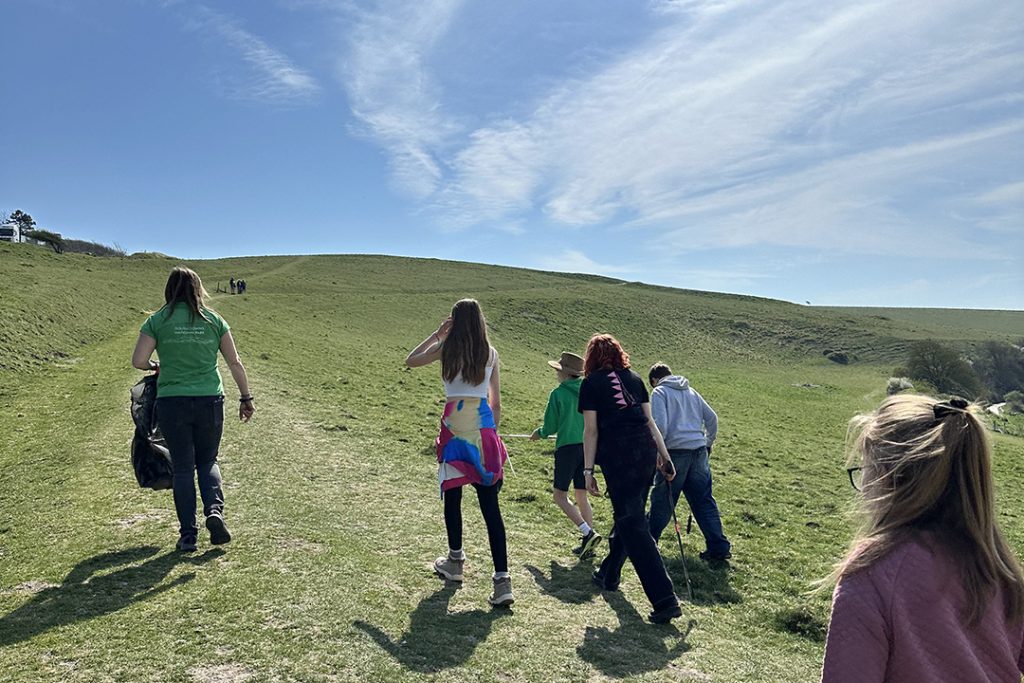
young people walking through the South Downs National Park

A supportive, small-group setting

With only 10 places available, the workshop offers a calm and inclusive environment where every young person is seen and heard. Sessions are led by the amazing Rozzy, a qualified children’s drama therapy coach from Dragon Drama, ensuring the atmosphere is nurturing, structured and sensitive to individual needs.

Who is it for?

This opportunity is open to teenagers in East Sussex who:

  • Are currently receiving free school meals
  • Would benefit from a confidence-building, creative experience
  • Are interested in drama, storytelling, or simply trying something different

How to apply

Places are limited and expected to fill quickly. 

This Easter, give your teenager the chance to step away from screens, connect with others, and discover new strengths – all in the inspiring surroundings of the South Downs National Park. 

🌳 Find out more and book your place here: Register for Make (Good) Trouble’s Easter club.

If you have any questions about the club prior to booking, you can contact us here: Get in touch.

This Drama Holiday Club is supported by East Sussex County Council as part of the Holiday Activities and Food (HAF) scheme, and the South Downs National Park Trust. If you’re looking for other Easter activities for your child that are part of the HAF scheme, there will be plenty of options! Take a look here: East Sussex HAF Programme.

South Downs National Park Trust logo
East Sussex County Council logo