If you’d asked us 18 months ago what 2025 had in store, we’re not sure we’d have guessed quite this ride. It’s been one of the toughest years financially in Make (Good) Trouble’s history – funding commissions have been harder to come by, budgets have been squeezed, and like so many small organisations in our sector, we’ve had to make difficult decisions along the way.
And yet. It’s also been one of the most rewarding. We recently put together our C.I.C (Community Interest Company) annual report and I thought it merited a blog post as it got me thinking about what we do…
Why this work matters more than ever
Today’s young people are growing up under pressures that would have felt unimaginable a generation ago. A major independent review into youth mental health, ADHD and autism, that’s due to be published soon, is to push back on the idea that this is a “snowflake generation,” with its lead author, Professor Peter Fonagy, telling the BBC there has been a real rise in mental distress among children and young people – anxiety, depression, self-harm and eating disorders chief among them. NHS figures back this up starkly: the number of children and young people in contact with mental health services in England has risen by 50% in the past five years, and one in three of those referred are still waiting for help a year later. (This probably isn’t news to parents reading this.)
Fonagy pointed to economic and employment uncertainty, social media pressures, and – tellingly – cuts to youth services over the past decade, which have left young people with fewer places to simply mix, belong and participate. As he put it, “participating in things… maintains good mental health.” SEND provision is under real strain amid ongoing reform, too, and many young people are struggling simply to find a foothold in the world of work, with employers increasingly reporting gaps in confidence, communication and interview readiness among school and college leavers.
(It’s well worth reading the government’s Young people and work: interim report on this issue.)
It’s against this backdrop that our work feels so important. We don’t just talk about building young people’s confidence and skills – we do it, one workshop, one interview, one podcast, one film at a time. Every session is, in its own small way, exactly the kind of participation Fonagy describes: a place to belong, contribute and be heard.
How we support young people’s confidence and mental health
In 2025, we helped train future NHS therapists by working with young people, at The Horsfall with the charity 42nd Street in Manchester, to turn their own lived experience – navigating services, being labelled “high risk,” growing up in the system – into training films that will shape how the next generation of therapists talk to and support young people.
We ran our Holiday Drama Club in Friston Forest for the fifth year running, with the brilliant drama therapist Rozzy from Dragon Drama, giving teenagers a safe, supported space to build confidence outdoors. As one parent told us, their son had come a long way since first joining aged nine while struggling with ADHD/ASD, past trauma and medical issues, and the club had become “one of his safe places” – somewhere “they understand me.”
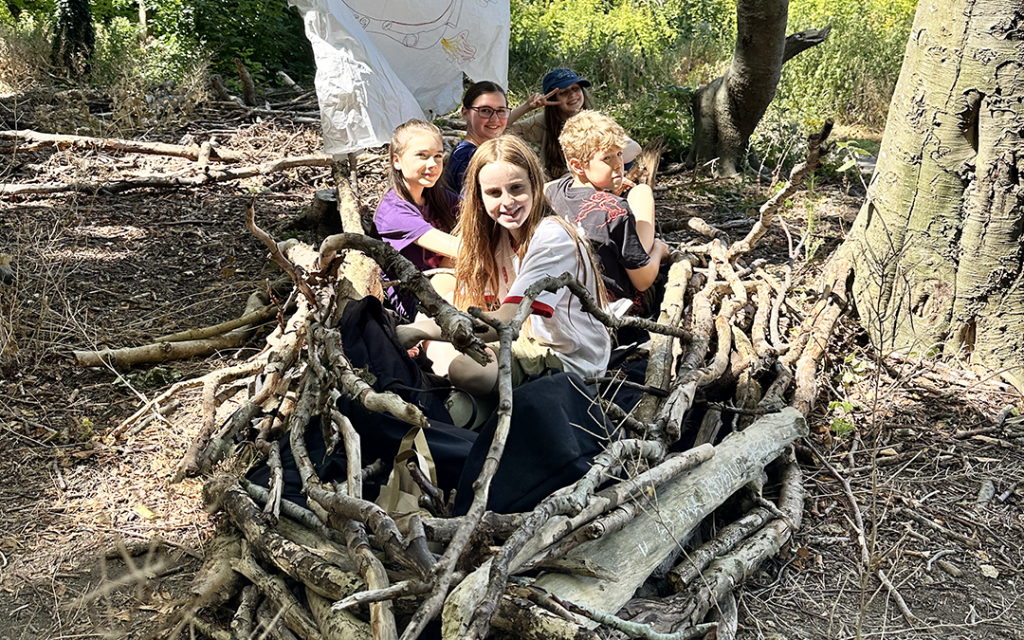
Young people taking part in Make (Good) Trouble’s Holiday Drama Club in Friston Forest, East Sussex, in partnership with Dragon Drama
We took Barking & Dagenham and Islington’s Youth Ambassadors through media training with The Ben Kinsella Trust, put Wakehurst work experience students behind a microphone for the third summer running, and helped young people across East Sussex tell their own stories about loss, bullying and social media pressures through a series of school mental health films.
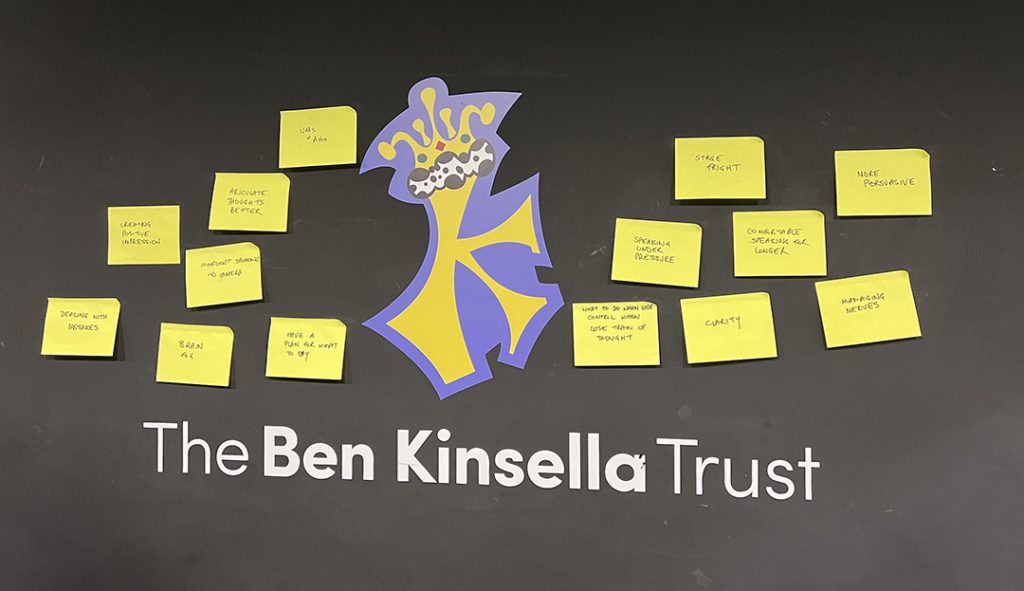
Workshop at The Ben Kinsella Trust where the charity’s ambassadors write their personal goals for the Make (Good) Trouble Media Training session.
Why we love this work
Working with young people is a joy. Their creativity is infectious, their energy keeps us on our toes, and what they bring to our projects through co-creation is genuinely inspiring. When we hand young people the microphone – literally and figuratively – and let them shape the questions, the themes, the stories, we get work that adult-led projects simply couldn’t produce.
We think more organisations should be doing this. Not consulting young people as an afterthought but building them into projects from day one as producers, interviewers and storytellers in their own right. It’s harder work. It’s also so much better. (Want to work with us to do this? Get in touch!)
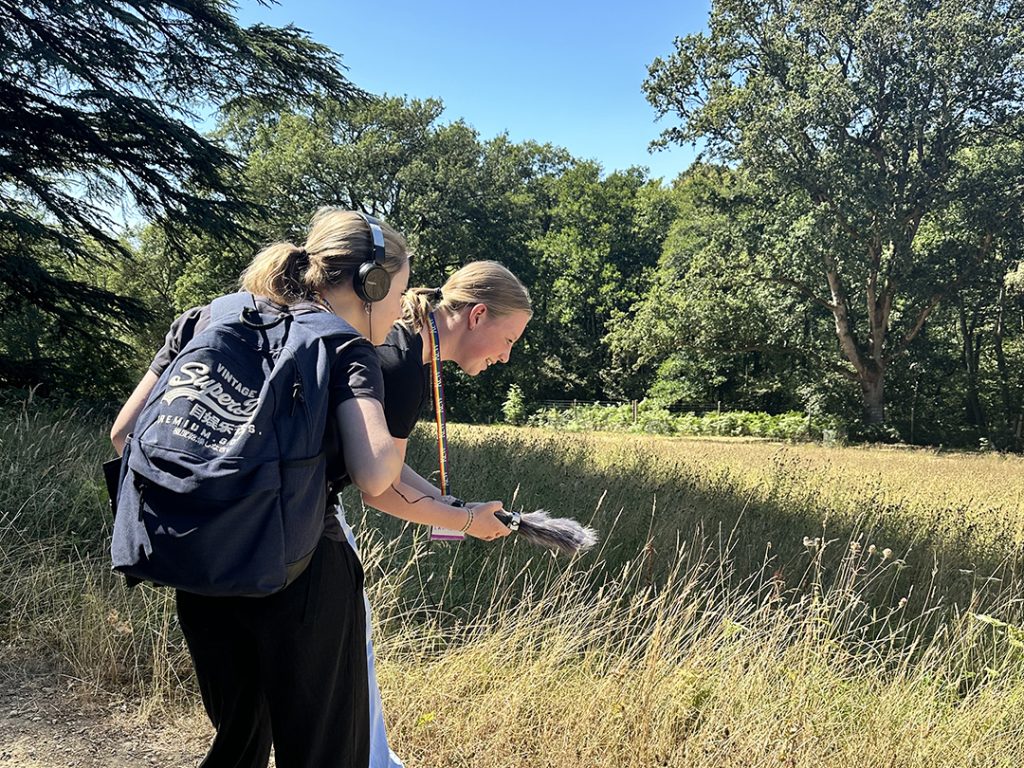
Young work experience students at Wakehurst recording sound effects for a podcast about their time at the botanic garden.
Onwards
To every parent, commissioner, school, charity and partner who’s worked with us over the years – thank you. It hasn’t always been easy, but seeing a nervous 14-year-old walk out of a workshop standing taller, speaking louder, and believing in themselves a bit more? That’s why we do this. Here’s to more good trouble in the future.
About Make (Good) Trouble
Make (Good) Trouble is a Community Interest Company (CIC) working alongside young people to challenge the status quo and spark real change. Through creative workshops, media training and co-produced content – from podcasts to policy – we help young people build confidence, develop communication skills and tell their own stories, shaping the systems that affect them and leading the change they want to see. We work with schools, youth clubs, local authorities, the NHS and charities across Sussex and beyond, supporting young people through some of the toughest challenges they face. Find out more at makegoodtrouble.co.uk.