In short: The government is introducing a new oracy framework for schools in England, and speaking and listening will have equal status with reading and writing in the revised national curriculum from September 2028. That matters because oracy builds young people’s confidence and self-esteem, and their chances in work and life. Make (Good) Trouble has spent years helping young people find their voice, and we’re building on our work to help them have their say, to network and developing agency to shape their futures.
Earlier this month, the Education Secretary announced that speaking and listening will have equal status with reading and writing in England’s revised national curriculum. A new national oracy framework will sit at the heart of that change.
At Make (Good) Trouble, we’ve been saying this for years. Being able to speak up, and to be properly listened to, shouldn’t be an extra for young people. It’s at the root of their confidence, their self-esteem and their chances in the world of work.
So we’re delighted. And we want to use this moment to tell you what we’ve learned, and where we’re heading next.
What is the oracy framework?
The oracy framework is new Department for Education guidance for schools in England on teaching speaking and listening. There will be a primary oracy framework and a combined oracy, reading and writing framework for secondary schools, alongside the revised national curriculum from September 2028.
Oracy is the ability to speak and listen well: putting your ideas into words, making sense of things through talk, and engaging with other people. The government wants every child in England to leave school able to do this with confidence.
Here’s what’s been announced so far:
- A new primary oracy framework. Guidance to help primary teachers make sure children are confident speakers and listeners by the end of Key Stage 2.
- A combined secondary framework bringing oracy, reading and writing together, so speaking and listening are built into every subject, not just English.
- Practical support for teachers. Tips, tried-and-tested strategies and examples of what works, building on the existing reading and writing frameworks.
- Equal status in the curriculum. On 15 October 2026, Education Secretary Lucy Powell told school trust leaders in Birmingham that oracy will become a brand-new strand of the English curriculum, with spoken language a core part of curriculum and assessment up to GCSE.
- A place in inspection. Ofsted has confirmed that oracy now features in its inspection framework.
The commitment came out of the independent Curriculum and Assessment Review, which made an oracy framework its first recommendation in November 2025. That followed the Oracy Commission’s 2024 report, We Need to Talk, which called for oracy to be treated as a ‘fourth R’. The revised curriculum is due for first teaching from September 2028, and the full framework is still to be published.
How does oracy affect life chances?
Strong speaking and listening skills are linked to better results at school, better job prospects and greater social mobility. But access to them is unequal.
The Education Secretary argued that for too long, oracy has been ‘a marker of privilege’. Some young people get endless chances to debate, present and perform. Many don’t.
That gap shapes life chances. The English-Speaking Union’s Why Oracy Matters report found good spoken language skills are crucial to social mobility, school attainment and later success in education and work. And the Oracy APPG’s Speak for Change inquiry found unemployed young people were almost twice as likely as their peers to feel school hadn’t given them the speaking skills they needed for later life.
Why does oracy matter for young people?
Oracy is often talked about as a skill for learning. It is. But in our experience, it’s about much more than that. It’s about whether a young person believes their voice counts.
It builds confidence and self-esteem. When a young person says something out loud and someone really listens, it changes how they see themselves. Do that often enough and it becomes part of who they are. Go without it, and staying quiet becomes a habit that’s hard to break.
It opens doors to work. Interviews, networking, asking for help, pitching an idea, speaking up in a meeting. So much of getting on at work comes down to talk. Yet only four in ten 8 to 18-year-olds told the National Literacy Trust they feel good at speaking in front of an audience. And in the Institute of Student Employers’ 2025 survey, 42% of employers said school and college leavers fell short on verbal communication, up from 22% two years earlier.
It gives young people agency. Being able to put your case, ask the awkward question, or challenge a decision that affects you is how young people shape their own lives. It’s also how they help shape the services, schools and communities around them.
As we wrote recently in Young people aren’t the problem, this isn’t a failing in young people. Many of the places where they used to practise, from Saturday jobs to youth clubs to drama lessons, have shrunk or disappeared. Confidence comes from practice, and practice needs opportunity.
How can young people build confidence in speaking up?
Young people build speaking confidence through practice: real tasks, in a safe space, with adults who take them seriously. That’s what we’ve learned from years of helping young people find their voice.
Giving young people a voice is what Make (Good) Trouble was set up to do. Everything we make, we co-produce with young people, so they speak for themselves rather than being spoken for. Along the way, oracy has been at the heart of our work, even when we didn’t call it that.
- Media training workshops. We prepare youth ambassadors for press, broadcast and social media interviews, including ‘as live’ interviews with no retakes. We’ve worked with the Ben Kinsella Trust, Surrey Youth Voice and students at The Horsfall, part of 42nd Street. Read more in Speaking up takes practice.
- Podcasts and radio. From our BBC radio series Raising Teens to We Ain’t the Same, young people plan, interview, present and tell their own stories.
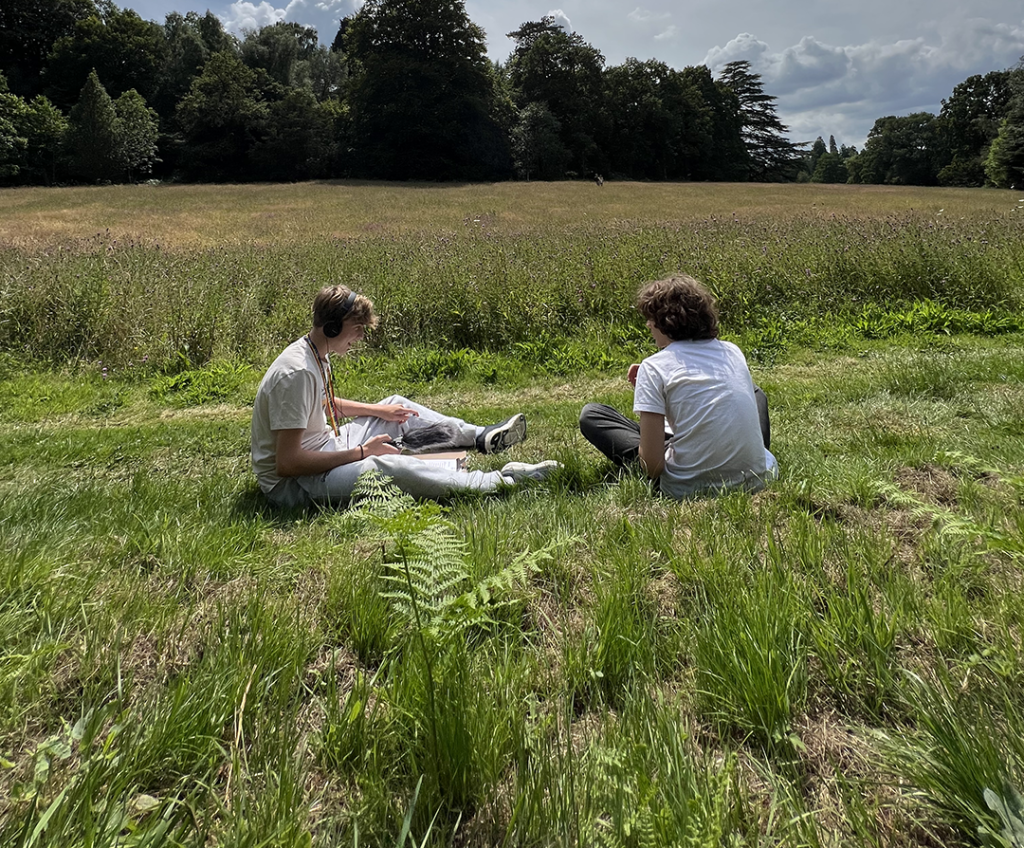
- Work experience with a voice. For three summers at Wakehurst, we’ve helped work experience students turn their week into a podcast, interviewing staff they’d never otherwise have met.
- Holiday drama club. In East Sussex, young people come back year after year, and we watch them grow in confidence, teamwork skills and speaking up for themselves.
- Research, focus groups and evaluation. We help councils, the NHS and charities hear what young people really think, and act on it.
The skills young people gain with us are recognised through RSA Cities of Learning digital badges, with more than 150 awarded so far.
One parent told us their son, who had found life immensely difficult, had become ‘more confident, more positive, dealing with tricky situations better’. That’s what finding your voice looks like.
Beyond the classroom: what’s next for Make (Good) Trouble
The oracy framework is a big step, and we’ll be cheering schools on. But it won’t be in classrooms until 2028. And young people need chances to be heard in lots of places, not just lessons: in youth clubs, at work, in their communities and in the decisions made about them.
That’s where we come in. Over the coming months, we’ll be building on our work to help young people:
- Have a say. Speaking up about the things that matter to them, and being listened to by the people and organisations who make decisions.
- Network with confidence. Walking into a room of strangers, introducing themselves, and building the contacts that too often depend on who your parents know.
- Take the lead. Developing the agency to shape their own futures, and to bring about the change they want to see.
This is already part of the workshops we offer. Take a look at our Media Training Workshops and Creative Workshops. We’re also building an oracy programme for young people. More on this soon! In the meantime, we’d love to hear from schools, charities, youth services, employers and funders who want to be part of what’s next.
Oracy framework FAQs
When will the oracy framework be published?
The Department for Education hasn’t confirmed a publication date yet. The revised national curriculum, including the new oracy frameworks, is due for first teaching in schools from September 2028.
Is oracy now part of the national curriculum?
It will be. On 15 October 2026, Education Secretary Lucy Powell announced that oracy will become a new strand of the English curriculum, with equal status to reading and writing. Ofsted already looks at oracy in school inspections.
What’s the difference between oracy and public speaking?
Public speaking is one part of oracy. Oracy also covers listening, discussion, explaining your thinking and talking with others in everyday situations, from a classroom debate to a job interview.
Does oracy only happen in schools?
No. Young people build speaking and listening skills in youth clubs, part-time jobs, drama, volunteering and community projects. Many of those opportunities have shrunk, so work outside school matters too.
How can my organisation work with Make (Good) Trouble?
We run media training, creative and podcast workshops, and youth voice research for schools, charities, councils and employers. Get in touch
What you can do…
If you work with young people and want them to feel confident speaking up, whether that’s in front of a journalist, an interview panel or a room full of decision-makers, get in touch. We’d love to hear what they need.
And if you think young people deserve to be heard, please share this post.