
Quick summary: The government is introducing a new oracy framework for schools in England, and speaking and listening will have equal status with reading and writing in the revised national curriculum from September 2028. That matters because oracy builds young people’s confidence and self-esteem, and their chances in work and life. Make (Good) Trouble has spent years helping young people find their voice, and we’re building on our work to help them have their say, to network and developing agency to shape their futures.

Earlier this month, the Education Secretary announced that speaking and listening will have equal status with reading and writing in England’s revised national curriculum. A new national oracy framework will sit at the heart of that change.

At Make (Good) Trouble, we’ve been saying this for years. Being able to speak up, and to be properly listened to, shouldn’t be an extra for young people. It’s at the root of their confidence, their self-esteem and their chances in the world of work.

So we’re delighted. And we want to use this moment to tell you what we’ve learned, and where we’re heading next.

What is the oracy framework?

The oracy framework is new Department for Education guidance for schools in England on teaching speaking and listening. There will be a primary oracy framework and a combined oracy, reading and writing framework for secondary schools, alongside the revised national curriculum from September 2028.

Oracy is the ability to speak and listen well: putting your ideas into words, making sense of things through talk, and engaging with other people. The government wants every child in England to leave school able to do this with confidence.

Here’s what’s been announced so far:

  • A new primary oracy framework. Guidance to help primary teachers make sure children are confident speakers and listeners by the end of Key Stage 2.
  • A combined secondary framework bringing oracy, reading and writing together, so speaking and listening are built into every subject, not just English.
  • Practical support for teachers. Tips, tried-and-tested strategies and examples of what works, building on the existing reading and writing frameworks.
  • Equal status in the curriculum. On 15 October 2026, Education Secretary Lucy Powell told school trust leaders in Birmingham that oracy will become a brand-new strand of the English curriculum, with spoken language a core part of curriculum and assessment up to GCSE.
  • A place in inspection. Ofsted has confirmed that oracy now features in its inspection framework.

The commitment came out of the independent Curriculum and Assessment Review, which made an oracy framework its first recommendation in November 2025. That followed the Oracy Commission’s 2024 report, We Need to Talk, which called for oracy to be treated as a ‘fourth R’. The revised curriculum is due for first teaching from September 2028, and the full framework is still to be published.

How does oracy affect life chances?

Strong speaking and listening skills are linked to better results at school, better job prospects and greater social mobility. But access to them is unequal.

The Education Secretary argued that for too long, oracy has been ‘a marker of privilege’. Some young people get endless chances to debate, present and perform. Many don’t. 

That gap shapes life chances. The English-Speaking Union’s Why Oracy Matters report found good spoken language skills are crucial to social mobility, school attainment and later success in education and work. And the Oracy APPG’s Speak for Change inquiry found unemployed young people were almost twice as likely as their peers to feel school hadn’t given them the speaking skills they needed for later life.

Why does oracy matter for young people?

Oracy is often talked about as a skill for learning. It is. But in our experience, it’s about much more than that. It’s about whether a young person believes their voice counts.

It builds confidence and self-esteem. When a young person says something out loud and someone really listens, it changes how they see themselves. Do that often enough and it becomes part of who they are. Go without it, and staying quiet becomes a habit that’s hard to break.

It opens doors to work. Interviews, networking, asking for help, pitching an idea, speaking up in a meeting. So much of getting on at work comes down to talk. Yet only four in ten 8 to 18-year-olds told the National Literacy Trust they feel good at speaking in front of an audience. And in the Institute of Student Employers’ 2025 survey, 42% of employers said school and college leavers fell short on verbal communication, up from 22% two years earlier.

It gives young people agency. Being able to put your case, ask the awkward question, or challenge a decision that affects you is how young people shape their own lives. It’s also how they help shape the services, schools and communities around them.

As we wrote recently in Young people aren’t the problem, this isn’t a failing in young people. Many of the places where they used to practise, from Saturday jobs to youth clubs to drama lessons, have shrunk or disappeared. Confidence comes from practice, and practice needs opportunity.
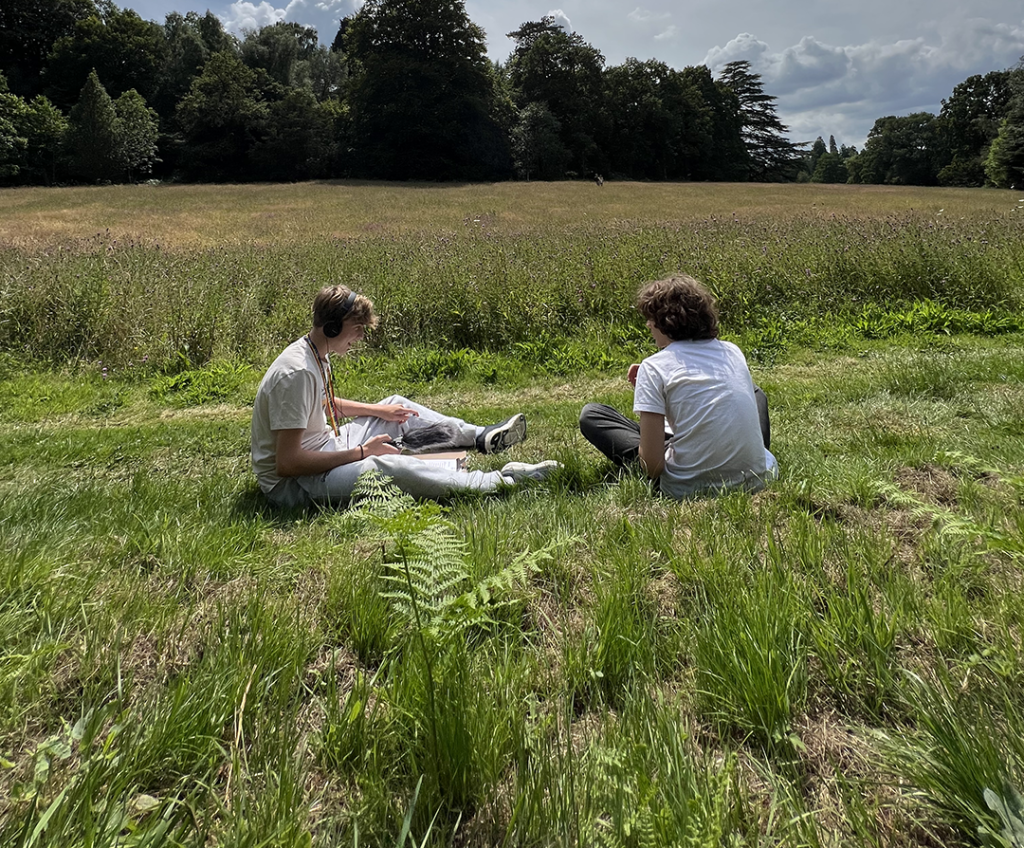
Two work experience students at Wakehurst interviewing each other to record a podcast about their week.

How can young people build confidence in speaking up?

Young people build speaking confidence through practice: real tasks, in a safe space, with adults who take them seriously. That’s what we’ve learned from years of helping young people find their voice.

Giving young people a voice is what Make (Good) Trouble was set up to do. Everything we make, we co-produce with young people, so they speak for themselves rather than being spoken for. Along the way, oracy has been at the heart of our work, even when we didn’t call it that.

The skills young people gain with us are recognised through RSA Cities of Learning digital badges, with more than 150 awarded so far.

One parent told us their son, who had found life immensely difficult, had become ‘more confident, more positive, dealing with tricky situations better’. That’s what finding your voice looks like.

Beyond the classroom: what’s next for Make (Good) Trouble

The oracy framework is a big step, and we’ll be cheering schools on. But it won’t be in classrooms until 2028. And young people need chances to be heard in lots of places, not just lessons: in youth clubs, at work, in their communities and in the decisions made about them.

That’s where we come in. Over the coming months, we’ll be building on our work to help young people:

  • Have a say. Speaking up about the things that matter to them, and being listened to by the people and organisations who make decisions.
  • Network with confidence. Walking into a room of strangers, introducing themselves, and building the contacts that too often depend on who your parents know.
  • Take the lead. Developing the agency to shape their own futures, and to bring about the change they want to see.

This is already part of the workshops we offer. Take a look at our Media Training Workshops and Creative Workshops. We’re also building an oracy programme for young people. More on this soon! In the meantime, we’d love to hear from schools, charities, youth services, employers and funders who want to be part of what’s next.

Oracy framework FAQs

When will the oracy framework be published?

The Department for Education hasn’t confirmed a publication date yet. The revised national curriculum, including the new oracy frameworks, is due for first teaching in schools from September 2028.

Is oracy now part of the national curriculum?

It will be. On 15 October 2026, Education Secretary Lucy Powell announced that oracy will become a new strand of the English curriculum, with equal status to reading and writing. Ofsted already looks at oracy in school inspections.

What’s the difference between oracy and public speaking?

Public speaking is one part of oracy. Oracy also covers listening, discussion, explaining your thinking and talking with others in everyday situations, from a classroom debate to a job interview.

Does oracy only happen in schools?

No. Young people build speaking and listening skills in youth clubs, part-time jobs, drama, volunteering and community projects. Many of those opportunities have shrunk, so work outside school matters too.

How can my organisation work with Make (Good) Trouble?

We run media training, creative and podcast workshops, and youth voice research for schools, charities, councils and employers. Get in touch

What you can do…

If you work with young people and want them to feel confident speaking up, whether that’s in front of a journalist, an interview panel or a room full of decision-makers, get in touch. We’d love to hear what they need.

And if you think young people deserve to be heard, please share this post.
Almost every week, I read another report or piece of research that highlights the issues young people face today. Anxious. Glued to their phones. Not “work-ready”.

Despite the doom-laden headlines, we see something different. At Make (Good) Trouble, we run media training, podcast workshops and a holiday drama club for young people. The young people we work with are full of potential, energy, ideas. They turn up, they try new things, and they have plenty to say when someone asks – and listens.

So I want to say two things. First, the problem isn’t young people. It’s the system they’re trying to get into. Second, there are two jobs to do, and we need to do both: help young people build confidence and skills, and change the things that are stacked against them.

In short: nearly a million 16 to 24-year-olds in the UK are not in education, employment or training (often shortened to NEET). That’s one in eight. Yet 84% of those surveyed for the government’s Young People and Work review said they want a job, education or training. Changing that means building young people’s confidence and skills, and fixing a jobs market that isn’t letting them in.

Why are so many young people out of work? It’s the system

If you have any skin in this game, take a look at Young People and Work, the independent review led by Alan Milburn for the Department for Work and Pensions. Its interim report, published in May 2026, tells us that nearly a million 16 to 24-year-olds are not in education, employment or training. That’s one in eight. Six in ten (the majority) of them have never had a job, up from four in ten twenty years ago.

It would be easy to blame young people for that. Milburn doesn’t. His review surveyed young people who are out of work and education, and 84% said they want a job, education or training. What he heard, again and again, was young people applying for dozens of jobs, sometimes hundreds, and hearing nothing back.

More demand-side changes are needed

For years, he says, the answer has been to help young people become more employable, giving them better skills and more help with their CVs. That’s the ‘supply’ side. It matters, but it isn’t enough if the jobs market isn’t letting them in. In his words, “the demand side matters as much as the supply side”. 

And this door has been closing:

  • Entry-level jobs are scarcer and many ask for way more experience than an 18-year-old can acquire.
  • Recruitment has moved online and been automated. A young person can be screened by a portal, a test or a recorded video interview before anyone has met them. (The conversations we’ve had with young people about this process are too depressing for words.) 
  • Apprenticeship starts for young people have fallen by more than 40%, according to Milburn’s review.
  • When an employer is nervous about the risk, jobs tend to go to older workers with a track record.

Milburn’s conclusion is that Britain has no real system for getting young people from education into work. That’s what I mean by systemic.

Why are young people less confident speaking up?

Nobody is born confident. You get there by doing things, usually badly at first, in places where it’s safe to get them wrong. A lot of those places have gone, or shrunk.

  • Saturday jobs. Milburn points out that part-time work for teenagers had been declining for two decades before the pandemic. That’s where a lot of us first learned to talk to strangers, and to a boss.
  • Youth clubs. His review describes youth clubs, libraries and community centres closing, and youth services being cut. (If you’re interested in what happened to youth clubs, read: ’Up the Youth Club’ by Emma Warren: A hidden history of UK youth clubs.) 
  • Drama. Its share of A-level entries has fallen 58% since 2010, according to the Campaign for the Arts.
  • Speaking in English lessons. Since 2014, the spoken part of GCSE English Language hasn’t counted towards the final grade.
  • Work experience. In some places, Milburn was told, it now depends on who your parents know.
  • Face-to-face time. The pandemic took it away at exactly the age when you learn about interacting and engaging with people.

So it’s no surprise that when the National Literacy Trust surveyed more than 105,000 UK 8 to 18-year-olds in 2025, only four in ten felt good at speaking in front of an audience. Or that in the Institute of Student Employers’ 2025 survey, 42% of employers said school and college leavers fell short on verbal communication, up from 22% two years earlier.

It becomes a loop. Speaking up makes you anxious, so you avoid it. You avoid it, so you never get the practice. Without the practice, the next time is even harder. 

Do this: build young people’s confidence and skills

None of that means we should just wait for the system to fix itself. Young people need chances to practise now, and that’s something we can all get on with.

Young people say so themselves – and not just to us. In Milburn’s survey, 64% said skills like speaking would make a real difference when applying for jobs. And the oracy charity Voice 21 found that teaching speaking skills directly builds confidence.

We see it in our own work:

  • At our holiday drama club in East Sussex, which we run with Dragon Drama, young people come back year after year. We’ve watched huge changes in their confidence, in how they work together and in how they speak up for themselves. (It’s joyous!)
  • At Wakehurst, we’ve spent the last three summers helping work experience students turn their week into a podcast. One student, Swasti, told us she started the week nervous and finished it feeling a lot more confident talking to people.
  • In our media training workshops, charities’ youth ambassadors rehearse live interviews until the nerves stop getting in the way. We’ve written more about media training for youth ambassadors.

What these have in common is simple: real tasks, a safe space, and adults who take young people seriously.

Do this too: what employers, schools and funders need to change

I don’t want to pretend a workshop fixes a jobs market. If we only ever work on young people, we’re telling them the problem is them. It isn’t. Here’s what else needs to happen.

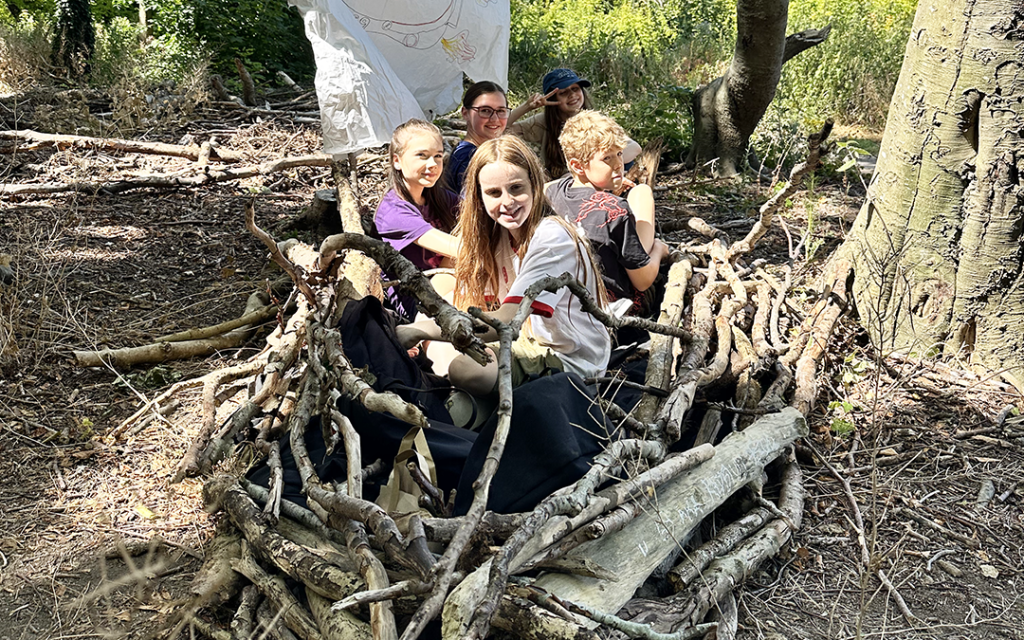
Young people in their boat built from sticks at the Make (Good) Trouble and Dragon Drama Holiday Club in Friston Forest, East Sussex

Young people at Make (Good) Trouble’s drama club using creativity and teamwork skills to make a boat from sticks in the forest

If you’re an employer:

  • Reply to applicants. Young people told Milburn that silence is worse than rejection, because a rejection at least gives you something to work with. 
  • Look again at any ‘entry-level’ job that asks for experience. 
  • Put a human being somewhere in your recruitment process.
  • Offer work experience with real tasks in it, and open it up to young people whose parents don’t have contacts.

If you run a school, or set the rules for schools:

  • Make room for speaking, drama and the arts. They’re where a lot of young people learn to be heard.
  • Treat work experience and careers guidance as core, not an afterthought.

Do you hold the purse strings?

  • Fund the places where young people get to practise being themselves: youth clubs, holiday clubs, community spaces.

And all of us:

  • Change the story we tell. Milburn rejects the caricature of a generation that isn’t interested in work, and so do we.

His final recommendations are due later in 2026. We’ll be watching for them.

Young people are our future

This stuff keeps me awake at night. And puts fire in our bellies to try and make a difference to the system. Milburn ends his foreword by saying that young people haven’t given up on work, so we mustn’t give up on them. We couldn’t agree more.

The young people we meet are full of potential, energy, ideas. They are our future. Let’s invest in them, by building their confidence and skills, and by fixing what’s stacked against them.

If you’d like to help us get this message out there (you could start by sharing this post!) or talk about workshops for the young people you work with, we’d love to hear from you, so please get in touch.

“Horticulture is something hard to learn from books or in classrooms, so I think being here shows you how a day’s work would actually be. It can be really rewarding to take care of something, and in turn, you didn’t realise it was taking tare of you at the same time.”

Make (Good) Trouble was invited to devise and deliver workshops for work experience students at Wakehurst – the wild botanic garden in Sussex, part of RBG Kew. Our workshops are designed to help students process what they have learnt on their placement, and to disseminate that into a podcast and written piece for their CV. 

The workshops

Starting with interview techniques training and how to use audio recording equipment, the groups spent time recording interviews with each other, describing their week, as well as sound effects from the gardens to help build an aural picture of their experiences.  

“The biggest challenge? It’s a very exhausting job – it fatigues you – but it’s not something that’s negative. To step back and look at how much work you’ve done, the rewards outweigh the fatigue tenfold.”

The resulting podcasts give listeners a real feel for what it’s like to be a work experience student at Wakehurst, working in horticulture, retail, education, marketing and the Millennium Seed Bank. 

They created the podcasts on the final day of their placement with Make (Good) Trouble. It is a one-day workshop, designed to help young people to make sense of their work placements, articulate what they’ve learnt, sharpen their communication and listening skills, and prepare for future job interviews. 

Grab a coffee and listen to Wakehurst’s Class of 2025.

Carrots, Caffeine and Conservation

by Euan, Tess, Ava, Mia and Evan.

Seeds, Soil and Strange Conversations

by Oliver, Thalia, Bryce, Evie and Ruby.

👋 If you’re interested in us augmenting your organisation’s work placements with a Make (Good) Trouble workshop, let us know!

🌳 Wakehurst work placements are open to young people aged 14-18. Contact wakehurstworkexperience@kew.org for information on how to apply.

🎧 Hear Wakehurst’s Class of 2024 podcasts here.

I’ve been following changes in the world of work over the last few years – partly because we run a business that employs and contracts young people, and partly because it’s like watching a fast-paced thriller play out. It’s fascinating. Global politics, AI, the rising cost of living and Gen Z’s evolving priorities (like more meaningful work, better work-life balance, positive company culture, supportive environments, training opportunities, and stability, say Youth Employment UK) have all contributed to a jobs market that’s constantly shifting.

It’s exciting but also overwhelming. For many young people, it’s hard enough just to find a way in, let alone work out where and how they might thrive in the long-term.

The latest Future of Jobs Report, 2025, from the World Economic Forum (WEF) gives us a clearer view of where things are heading. With insights from over 1,000 global employers, it highlights the challenges young people face. It also lays out the opportunities to be had. If we – and by ‘we’, I mean young people, employers, local authorities and governments – act now.

“On average, workers can expect that two-fifths (39%) of their existing skill sets will be transformed or become outdated over the 2025-2030 period.” Future of Jobs Report, 2025.

What should young people focus on?

The good news is that an estimated net 78 million new jobs will be created globally by 2030, according to the WEF report. But a lot of the roles we’re familiar with will either be transformed or vanish. This means that the focus needs to be on skills: what you can do, how you think, and your ability to keep adapting.

Here’s what young people should be working towards:

1. Tech skills – even the basics go a long way

You don’t have to become a coder (though if that’s your thing, go for it). But having digital confidence – like understanding AI, data, online tools, and cybersecurity – is becoming a must, no matter what field you’re in. These skills are at the heart of nearly every fast-growing job sector, according to WEF.

👉 Try this: Take a free online course in AI basics or data analytics. You don’t need to become an expert, just knowing the language will help you stand out.

2. Human skills – the ones tech can’t replace

These are increasingly important – in terms of job prospects as well as your wellbeing. As machines take on more of the routine work, your value comes from what they can’t do: critical thinking, creativity, empathy, adaptability – in our opinion, the interesting, fun stuff! Employers are increasingly looking for people who can think for themselves, work well with others, and handle change.

👉 Try this: Get involved in projects, part-time jobs, volunteering, or anything that builds your communication and problem-solving muscles. These experiences often teach you way more than formal study.

3. Green skills – for work that makes a difference

Jobs linked to climate action and sustainability – like renewable energy, environmental management, and electric vehicle tech – are booming. If you care about the planet (and over 80% of under 15s do), these roles offer a way to earn a living and make a real impact.

👉 Try this: Look into internships or modules in sustainability, even if it’s not your main focus. More industries are going green, and they’ll need people who get it.

The 3 biggest challenges young people face right now

1. Skills mismatches

Too many young people are coming out of education with skills that don’t match what employers need. At the same time, businesses are struggling to find people who are ready to hit the ground running.

This isn’t your fault. It’s a systemic issue. It means we urgently need to build better bridges between education, training, and work.

2. Automation and disappearing roles

Entry-level jobs that once helped young people get a foot in the door (like admin, data entry, retail) are being automated. That makes early career paths more fragile and competitive. 

3. Cost of living and career insecurity

Starting a career in the middle of a cost-of-living crisis is tough. When you’re juggling rent, bills, and perhaps student debt, it’s harder to take chances on training, internships, or lower-paid but valuable experience-building roles.

The 3 biggest opportunities to go for

1. Tech is hiring – and will be for a long time

There’s a global shortage of people with skills in AI, fintech, data, and cybersecurity, according to the WEF report. Even if you’re not a “tech person,” showing some fluency with digital tools can open doors.

2. Green jobs give you purpose and security

The transition to a greener economy will create thousands of jobs in the coming years and many of these are roles that didn’t even exist a decade ago. Take a look at some green careers.

3. Work is getting more flexible and global

Remote work, freelance platforms, and portfolio careers are giving young people new ways to build skills, make money, and create careers on their own terms, regardless of your location.

What employers and policymakers should be doing

If you’re an employer, educator, or policymaker reading this, here’s our key message: young people are motivated, capable, and ready to contribute but they need better systems around them.

Here’s how employers and policymakers can help:

  • Rethink education so it focuses on adaptability, digital confidence, creativity, and resilience – not just exam results.
  • Support mental health and wellbeing in the workplace. A caring environment isn’t a “nice to have” – it’s a must.
  • Invest in accessible training and paid entry-level opportunities. If a young person can’t afford to work for free, we all lose out on their talent. (You must pay interns if they’re classed as a worker, that’s the law, and just plain decency.)
  • Bridge the gap between education and work. That could be through real-world projects, mentorship, apprenticeships, and employer partnerships.

We also need to fund and champion lifelong learning – not just for young people, but for everyone. In our rapidly changing world, the ability to learn, unlearn and relearn is important – not just for work, but for life. And while that might sound exhausting, with the right support, it can be energising. It’s a chance to spark new ideas, unlock new careers, and reshape work for the better. And crucially, young people must be part of that transformation, not just as learners, but as co-creators of the future they’ll inherit.

What next?

The future of work is already here – and it’s changing fast. But young people aren’t scared of that. They’re used to change. What they do need is support, direction, and opportunity.

If you’re a young person starting out right now, here’s the best advice we can give: don’t chase job titles, build future-ready skills. Be curious. Stay flexible. Learn how to learn. That mindset is your best long-term asset.

And to the rest of us – employers, educators, governments – let’s not make young people fight their way in. Let’s build pathways, offer support, and co-create a future of work that works for everyone.