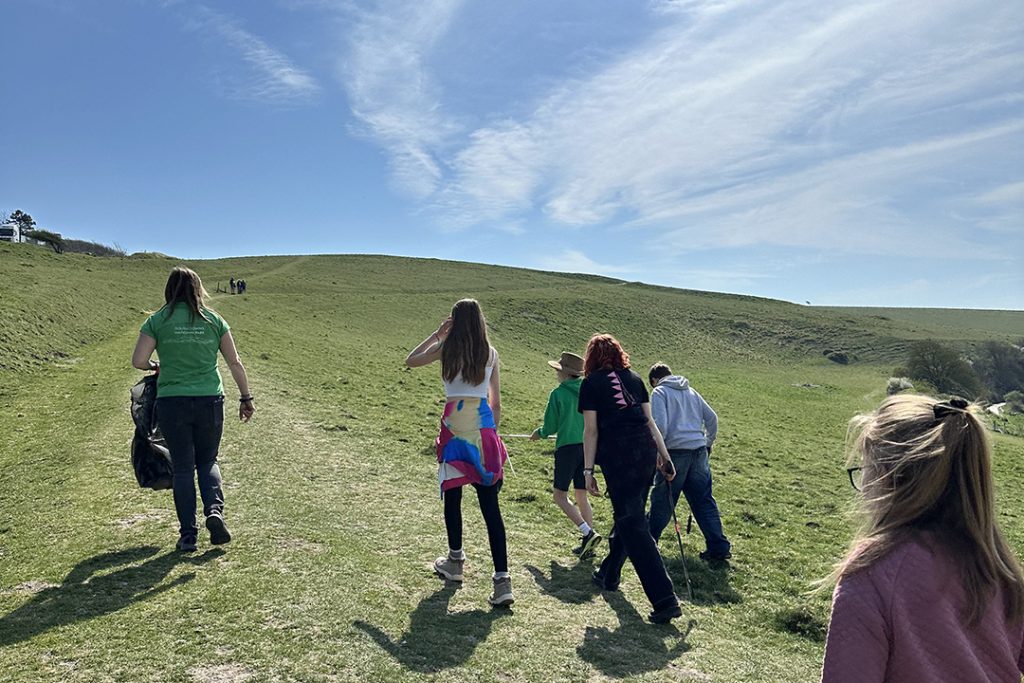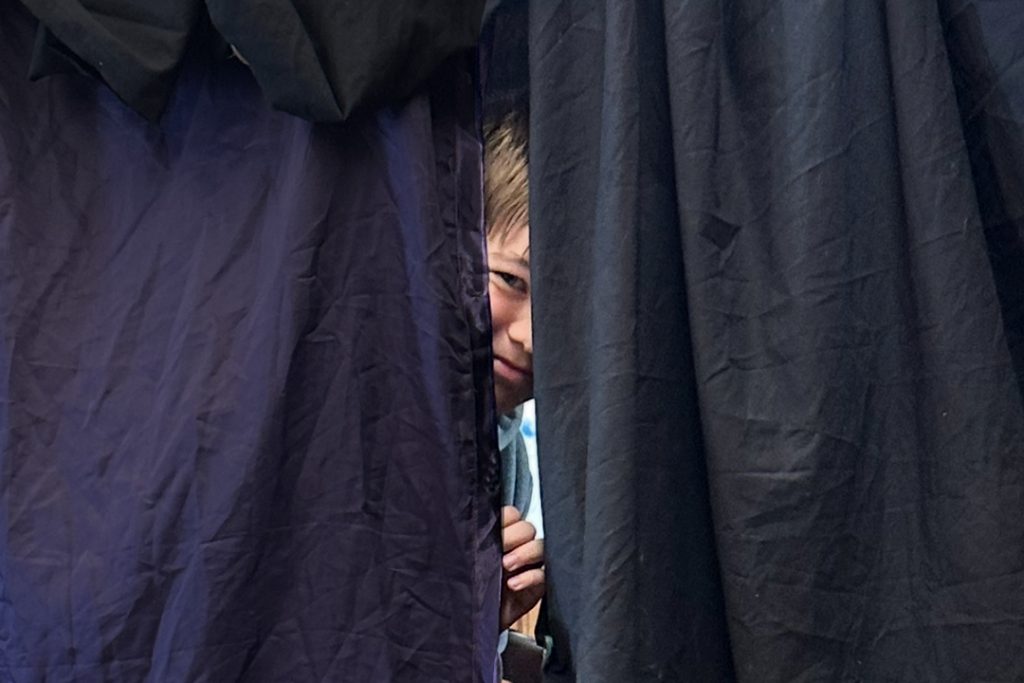
For the last three summers, we’ve packed up our microphones and headed to Wakehurst – part of the Royal Botanic Gardens, Kew, tucked into the Sussex countryside – to spend a day with their Work Experience students. Our job: help them turn a week of hands-on learning into a podcast. Their job: tell us what it’s like to work, for real, for the first time.
Every year, we come away thinking the same thing. Good work experience isn’t a box to tick. Done properly, it’s one of the most valuable weeks a young person can have.
What is a Make (Good) Trouble workshop?
A Make (Good) Trouble workshop is a one-day podcast and storytelling session that helps young people on work experience placements make sense of what they’ve learned, build confidence in talking about their own achievements, and come away with a polished podcast episode and a written piece for their CV. We work with schools, charities and employers running work experience placements for 14–18 year olds, and we’d love to bring it to yours – get in touch to find out more. (We also run other kinds of creative workshops)
The stuff school doesn’t teach you
You can learn a lot in a classroom. But nobody hands you a worksheet on how to introduce yourself to a room full of strangers, how to keep your cool when forty excited children are all asking questions at once, or how to pitch your own idea for a social media post and then see it go live.
That’s the gap Wakehurst’s work experience programme fills – and it’s why we love working with them.
Take Swasti, who worked with the visitor experience and commercial team: “At the beginning of the week, I was actually quite nervous… but as the week went by and I started looking at the other staff and how they do everything, now I feel a lot more confident to talk to people.” By the end of the week, she was guiding visitors around the site and running the till in the plant centre – real responsibility, not busywork.
Or Arthur, who spent his week in marketing and communications: “It gave me a brilliant sense of what the working environment here at Wakehurst is… my favourite part was creating social media posts because I got to go outside, look at it, do the research, and then put together, completely on my own, a social media post.”Knowing his work would be published – on Wakehurst’s Instagram and Facebook – gave him, in his words, “a sense of achievement.”
That’s the difference between shadowing someone and doing the job. Wakehurst trusts these young people with genuine tasks and ownership, and it shows in how they talk about their week.
Confidence, teamwork, and finding your voice
Ask any employer what they wish young candidates arrived with, and “confidence to contribute” will be near the top of the list. It’s also one of the hardest things to teach – you can’t fake your way into it. You have to be given the chance to practise it.
Charlotte, who worked in the learning department, ended up doing far more than she expected: “At the start of the week, I was definitely expecting to play a small role… however, I actually played a much bigger role when I was with some teachers. I even helped to teach some lessons, and I added a lot of extra information that I think was useful.” She wasn’t just tolerated – she was genuinely useful, wrangling school groups, transporting equipment, and even fielding a memorable case of mistaken identity during pond dipping (turns out excited eight-year-olds are very keen for a newt to be an axolotl).
Holly, working with the Marcoms team, put her finger on something we hear every year: “Everyone that works here… speaks well of what they do and loves what they do and is really passionate about it. It really rubs off on you.” Being surrounded by people who genuinely enjoy their jobs is its own kind of education – one no textbook can offer.
The nature effect
There’s another ingredient that makes Wakehurst’s placements stand out: it’s all happening outdoors, in one of the most beautiful landscapes in the country.
Sammy, who worked in the learning department, put it simply: “It’s made me feel happier just being outside quite a lot and quite at peace with the world… it’s helped improve my well-being.” Hannah, who worked in the Millennium Seed Bank, described how the experience shifted her whole perspective: “You can get a bit caught up in climate anxiety, but actually to be able to do something so hands-on and impactful… it’s made me feel really inspired that there are things that I can do.”
Abby, who spent her week in the seed bank’s lab, felt the same connection deepen: “After spending time with all the seeds and learning about how many species of plant are actually so critically endangered, I feel a lot more connected to the plants around me… it makes me feel like I need to do more work to protect the environment.”
This is where the real magic happens – young people don’t just leave with a stronger CV. They leave as genuine advocates for conservation, carrying Wakehurst’s mission with them long after the week ends.
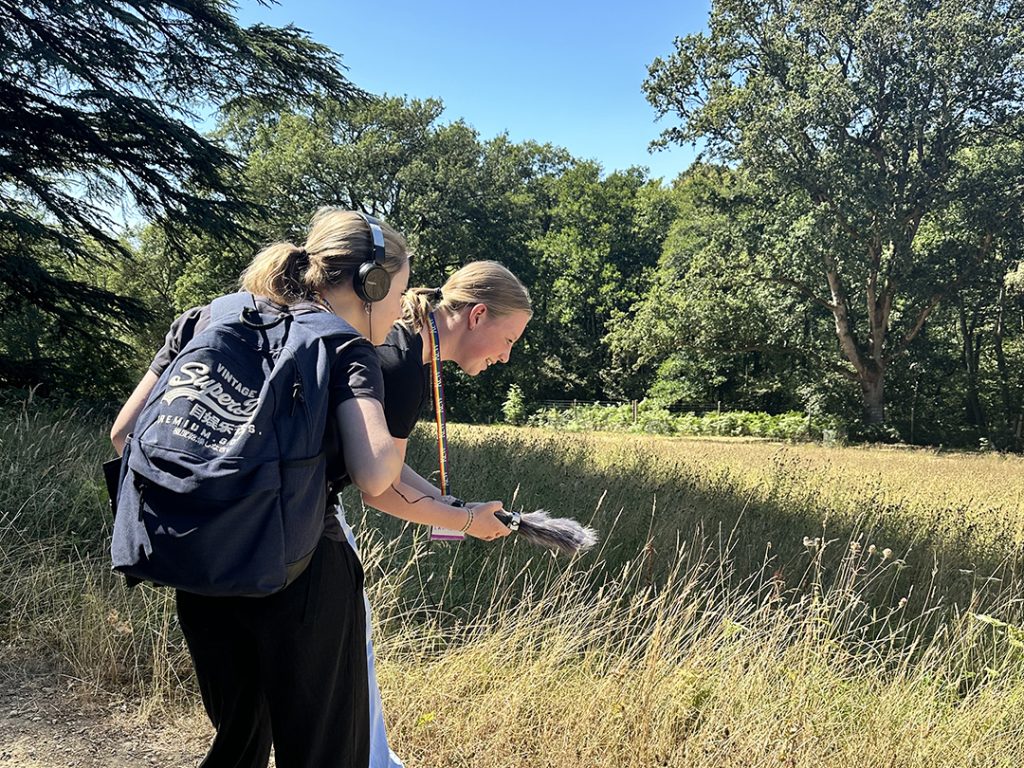
Work Experience students recording the sound of a bee at Wakehurst.
From placement to podcast
Our role is to help capture all of this before it fades. On the final day of each placement, we run a one-day workshop designed to help students make sense of what they’ve just experienced. We start with interview techniques training and show them how to use recording equipment, then the group spends the day interviewing each other, describing their week, and gathering sound effects from the gardens to build a real aural picture of their placement.
The result is two things: a podcast that gives listeners a genuine feel for life as a work experience student at Wakehurst – across horticulture, retail, education, marketing and the Millennium Seed Bank – and a written piece they can put straight on their CV.
It’s also, often, the first time these young people have been asked to reflect properly on their own work and articulate what they’ve learned. That skill – being able to talk confidently about your own experience – is one that will serve them in every job interview they ever do.
As Hannah put it, thinking back to reapplying after being unsuccessful the first time: “I think keep going if it’s something that you think you’ll enjoy. It’s worth it.”
Listen for yourself
Evergreen Appreciation – by Abi, Charlotte, Swasti, Arthur and Sammy, with additional sound effects by Ellen 🎧 Listen on SoundCloud
Germination, Communication and Everything in Between – by Holly, Sophia, Hannah and Lauren 🎧Listen on SoundCloud
Why this matters right now
We believe strongly in helping young people onto the work ladder – responsibly, and with real substance behind it. That matters more than ever. Entry-level jobs are getting harder to come by, and for a lot of young people, a well-run work placement is the only chance they get to find out what a workplace feels like before they’re expected to walk into one for good.
Wakehurst’s approach shows what’s possible when an organisation takes that responsibility seriously: real tasks, trust, and reflection at the end of it. The result is a group of confident, articulate ambassadors – for Wakehurst, for conservation, and for the idea that young people deserve to be taken seriously at work.
FAQs about our work experience workshops
How long is a Make (Good) Trouble workshop?
It’s a one-day workshop, usually run on the final day of a work experience placement, so students can reflect on the whole week while it’s fresh.
What age group is it suitable for?
We usually work with young people aged 14–19, matching the age range of most school and organisational work experience placements.
What do students come away with?
A finished podcast episode, a written piece they can add straight to their CV, and practical interview, communication and storytelling skills they’ll use in future job applications.
Do students need any experience with audio or podcasting?
None at all. We start from scratch with interview techniques training and how to use the recording equipment, so no prior experience is needed.
Can we run this alongside our own work experience programme?
Yes, the workshop is designed to sit on top of an existing placement, whatever the sector, to help students process and articulate what they’ve learned.
Get in touch
If you’re interested in us augmenting your organisation’s work placements with a Make (Good) Trouble workshop, get in touch.
Wakehurst work placements are open to young people aged 14–18. Contact wakehurstworkexperience@kew.org for information on how to apply.