I’ve followed women’s football for the past decade. Ten years ago, if I couldn’t make it to a match in the top flight of women’s football, I’d have to resort to following the action on Twitter, looking for anyone who was tweeting ball-by-ball coverage (hello Girls on the Ball, @Stillberto!). There was no TV coverage, no FA Player streaming matches. There was little to no coverage in the national press, and scant information about players, managers, tactics, strategies – all the things that make following the game interesting and exciting. But times are changing.  

It really feels as if we have reached a tipping point. After a 50-year ban by the FA between 1921 and 1971 (their view was that football was “quite unsuitable for females”), with women resorting to forming their own leagues and tournaments, playing in boys’ teams in boy’s or men’s kits, the tide has turned.

Over 1 billion people tuned in to watch the 2019 Women’s World Cup and for the first time England’s women had their own bespoke kit. In April 2022, 91,648 fans filled Camp Nou to see Barcelona Women take on VfL Wolfsburg in the Champions League semi-final. And with the Women’s Euros about to kick off in July, we’re going to see an explosion of coverage (at last!) of the women’s game. 

🎧Listen to our Goal Power podcasts 👇

This summer, get yourself down to Brighton Museum. You’ll be treated to an amazing exhibition, Goal Power! Women’s Football 1894-2022,  dedicated to the unstoppable rise of women’s football over the last 100 plus years. They have a fantastic array of memorabilia, from the uncomfortable-looking boots worn by munitions worker Fanny Williams in 1921, to Brighton General Post Office team programmes, shirts and trophies from the 1960s and ‘70s, and (for the first two weeks) the 2022 Women’s Super League trophy. The exhibition runs to 25 September 2022.

You’ll also see a few QR codes that link to some fascinating interviews that Make (Good) Trouble helped to create…
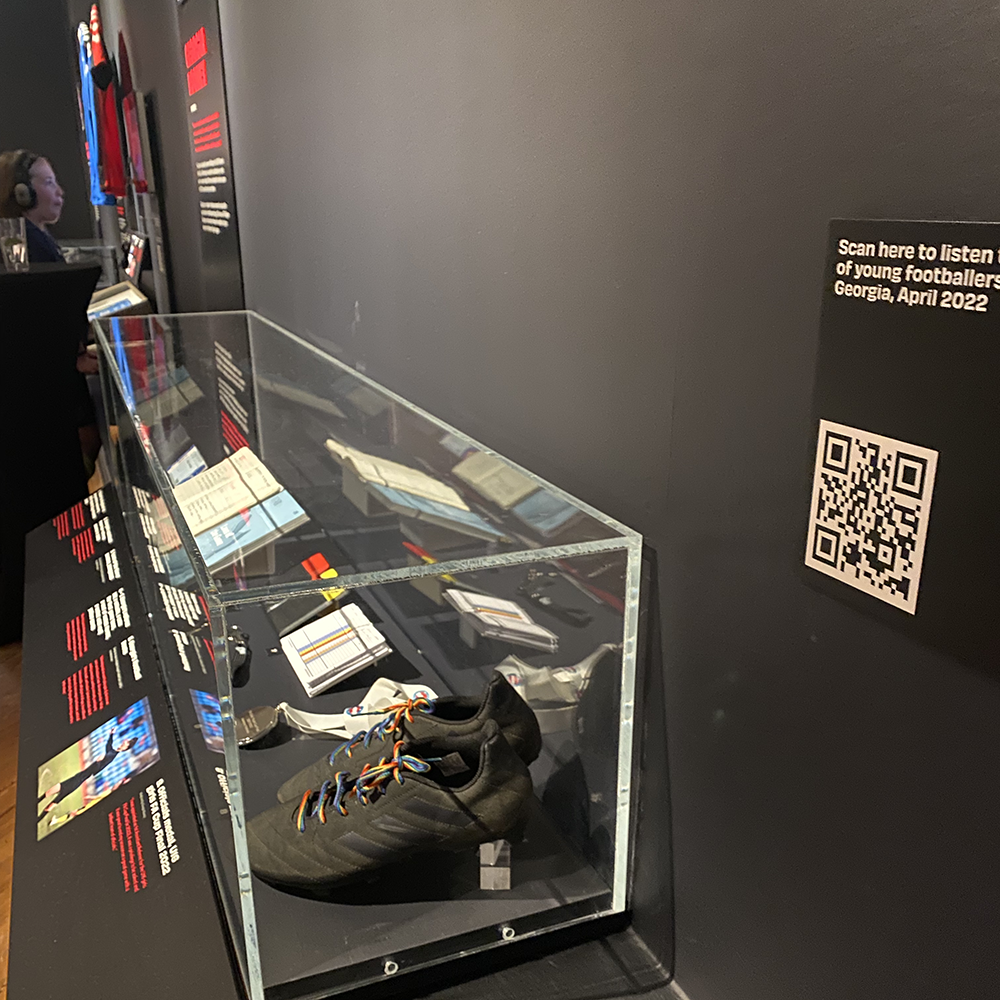
Take your headphones to the Goal Power! exhibition at Brighton Museum and hear stories from the likes of referee Georgia Rooney about her part in the beautiful game

In April, Make (Good) Trouble worked alongside photographic artist and artist facilitator Lindsey Smith, to help seven young players, aged between 12 and 14, interview legends of the game, and those working in and playing football today. The resulting podcast series gives us real insights into what it was like to be a player in the 1960s and ‘70s, and how that is changing for those involved in the game today. 

The interviews

A fascinating conversation between young female footballers from Sussex

⚽️ Listen to the young players’ conversation (10 minutes)

Marta, Olivia, Bo, Lili, Rosa, Caitlin and Verity talk about their experiences getting into the game, their aspirations and how they deal with sexism. 
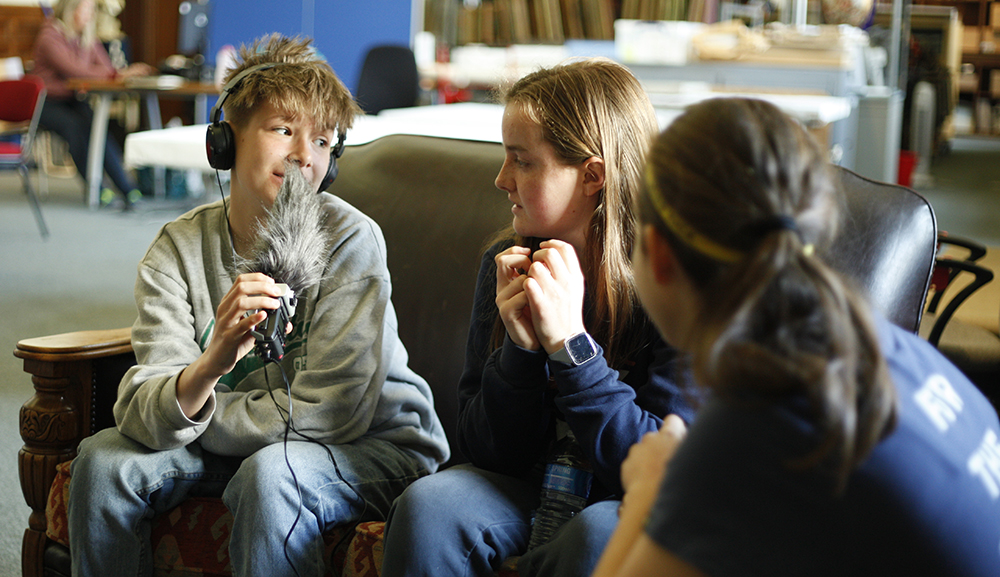
Young players learning how to use audio equipment and discussing what football means to them.

Eileen Bourne started playing football in the 1960s for Brighton GPO team and was part of starting up a local league and national women’s leagues. 

⚽️ Hear Bo and Rosa’s interview with Eileen Bourne (7 minutes)

“My dream was that I would be playing in a cup final at Wembley… That was a dream that was never going to come true, but now it’s different. Girls have played at Wembley.”

Petra Landers, German international player was part of the team that won the Euros in 1989. The German FA infamously presented their triumphant team with a coffee set for winning the trophy. Today Petra is a volunteer coach and mentor working with girls in Ghana.

⚽️ Hear Caitlin and Lili’s interview with Petra Landers (7 minutes)

“I’m going into the communities [in Ghana]. I will have football camps, maybe three or four days… My friend and me, we are going through the communities by motorcycle and this will be a brilliant adventure…. I try to find sponsors and even if I don’t find them I will do it. It’s my passion, my goal, my everything.”

Georgia Rooney, a professional referee and trainer. Inspired by seeing female referees at the 2019 Women’s World Cup, she Googled “how to become a referee”. Her ambition is to referee WSL and international matches. 

⚽️ Hear Marta and Olivia’s interview with Georgia Rooney (6 minutes)

“I always wonder because I was good when I was little, if there was anyone around who was focused on women and girls football and they’d have seen me play and thought she could go on a team or might have just fostered my interest a little bit and helped me go somewhere with it. I just wonder what a difference that would have made because no one paid any attention because no one thought that football was really for girls.”

Lewes FC’s Rhian Cleverly, Karen Dobres and Ellie Ramsauer

⚽️ Hear Bo, Marta, Caitlin, Rosa and Olivia’s interviews with Rhian, Ellie and Karen from Lewes FC

Rhian Cleverly, captain of Lewes FC Women and former Welsh international. She is proud to be playing for “the best team in the world”, the first, and currently only, professional or semi-professional club in the world that splits its resources equally between its men’s and women’s teams. 

“It’s given me the best experiences and friendships I’ve ever had in my life. There’s been tough times, but I think it’s also prepared me, like being released [from a contract] in France – I lost my home, I had a boyfriend at the time, so we broke up, I had lost my car, lost my job, and I was like, oh, what do I do now? So now I think little things like being injured and having surgery, it’s not as big a deal…  it’s prepared me for other things in normal life. So, yeah, I would say if you enjoy it and it makes your heart pump and it makes you smile, then definitely go for it because you won’t regret it.”

Ellie Ramsauer, coach for the under 14s development pathway at Lewes FC (since May 2022, Manager of Saltdean Women’s Development Side), has played football since she was 6. She works in the evenings and at weekends alongside a full-time job. 

“I think boys are more pushed and girls are more excluded. I mean, if you really want to, you can get into it, but there’s not the same encouragement as there is for boys… I think when I was younger, there weren’t many girls teams, not many girls in boys teams either. When I went to watch Arsenal women, they all had men’s hand-me-down kits. I don’t think they were paid either. They never played in big stadiums. Yes, I think respect for the game has grown exponentially.”

Karen Dobres, elected co-director at Lewes FC, the first (and currently only) football team to share its resources equally between its men’s and women’s teams. She is involved with fan and community engagement and financial sustainability. She is passionate about raising the profile of the club and promoting its ethos and practice of equality. 

“I think we’re a long way off equality, but I think that’s simply down to decisions in board rooms. So it’s not like there’s a lot to overcome, really, because we [at Lewes FC] had a lot to overcome when we introduced equality, but everyone seems to have come round to it. Now the sponsors are on board, right? And our men’s team have definitely not suffered. They’ve also been promoted. It’s an important thing to say.”

https://www.instagram.com/p/Ce3lz3rIL0o/

👏 Take a look at Lewes FC and see the brilliant work they’re doing to promote equality.

♥️ This project was made possible with the support of the Lottery Heritage Fund.
Brighton has the most internet searches for the word ‘lonely’. Almost 20% of children living in cities say they often feel lonely. (ONS, 2018)

After two years of Covid restrictions, 35% of people aged 16-25 say they have never felt more alone (Feb 2022)

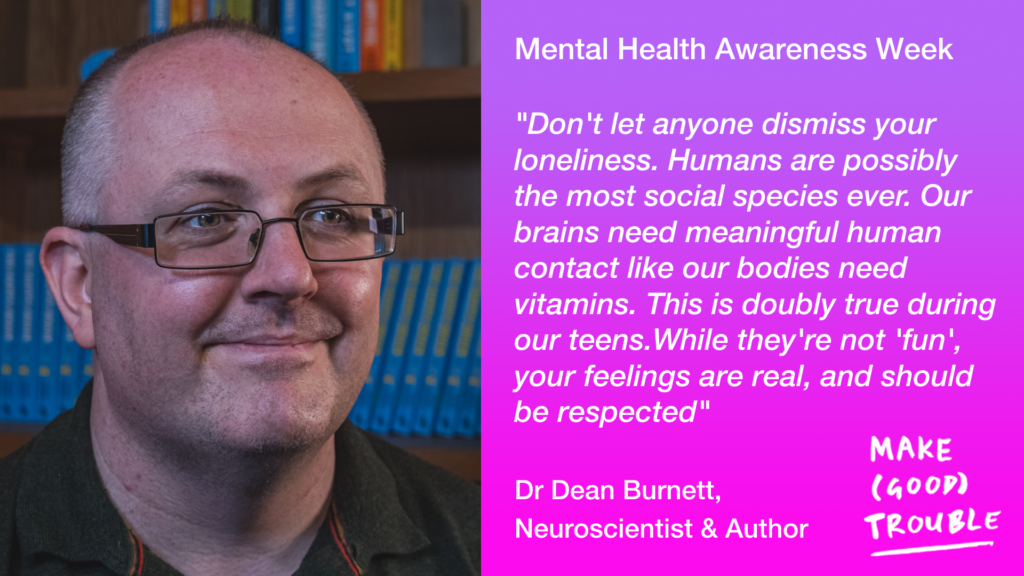
Loneliness can be a strange feeling because you can have feelings of loneliness even when you are around people. I think it comes down to the connections with people that really stop us feeling lonely or make us feel lonely when that connection isn’t there or is inauthentic. 

The pandemic has shown us first-hand the effects of loneliness and isolation and the risks many young people face today. Self care is extremely important for a young person and inclusion is something we as humans thrive on. The feeling of being accepted and being around peers where you feel included is vital for social and emotional development. This is often something that is overlooked in today’s society.

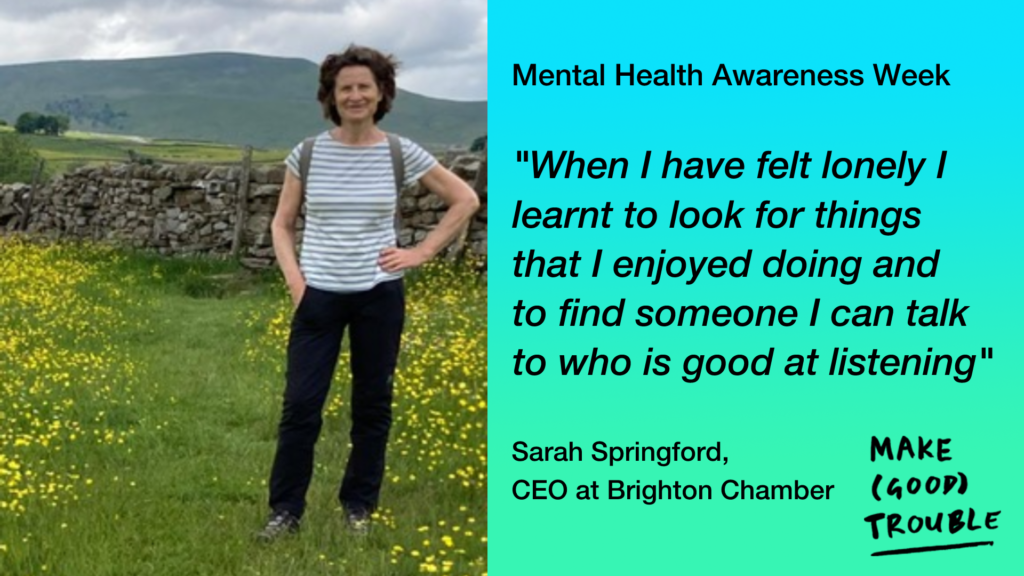
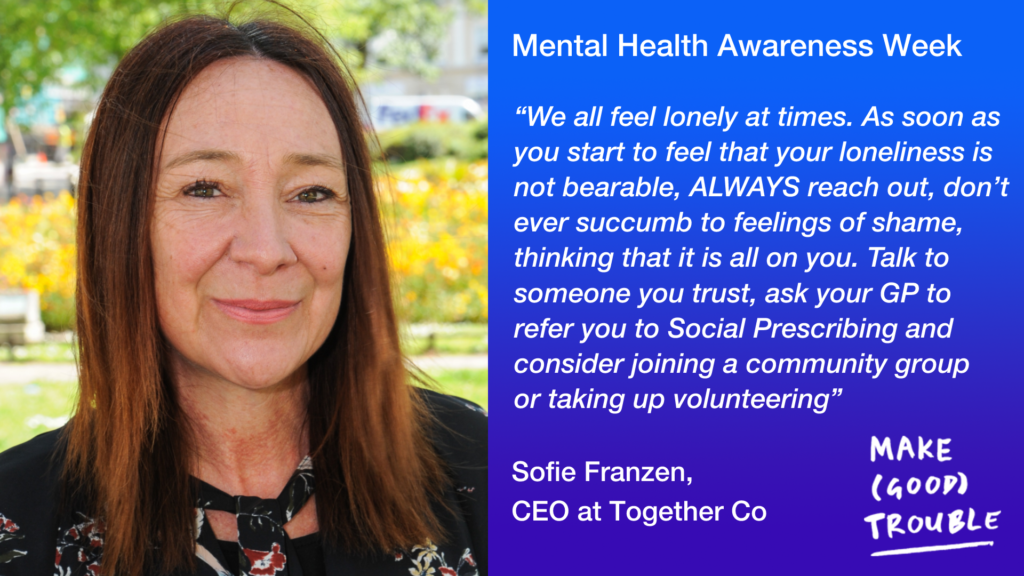
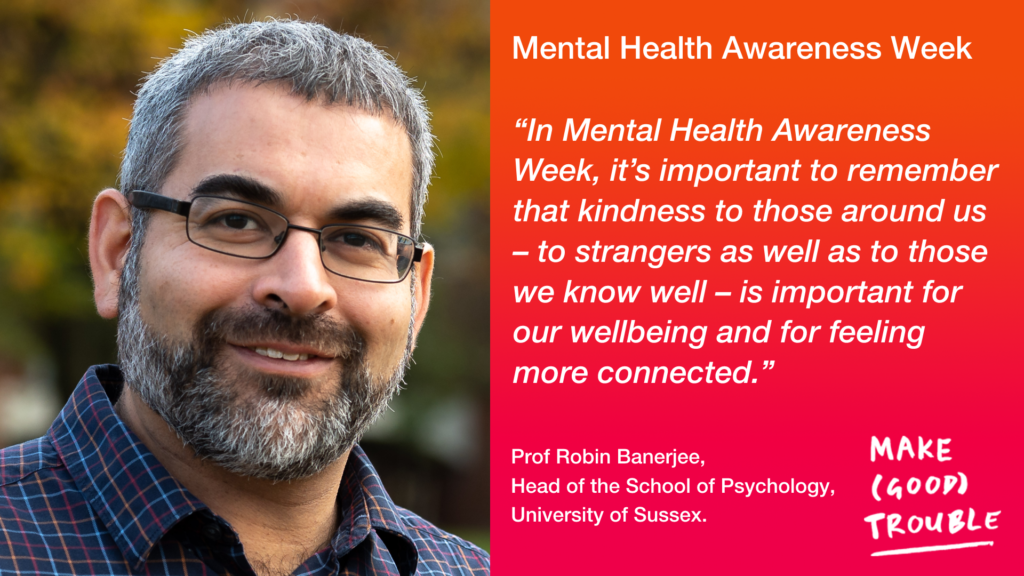
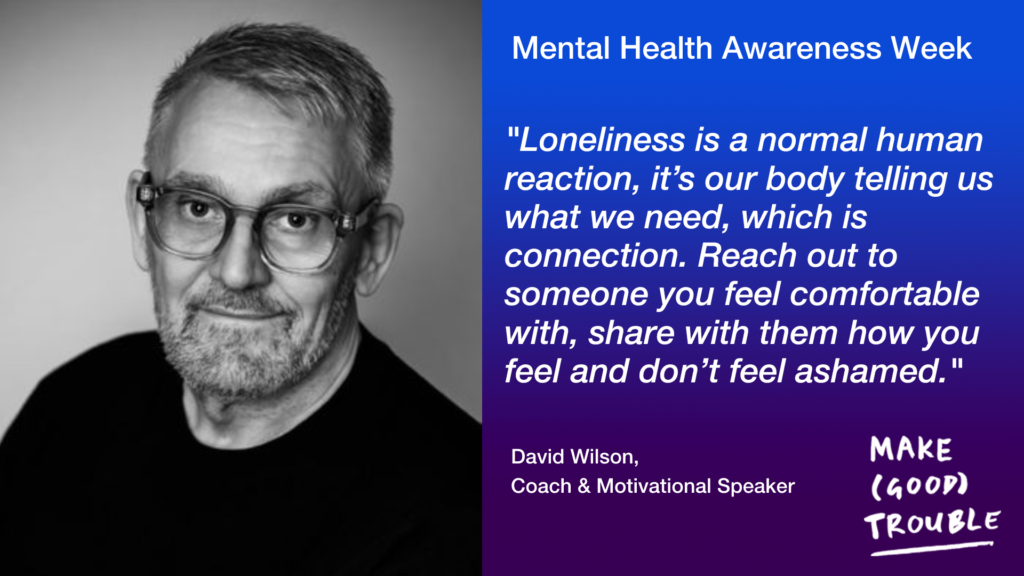
During Mental Health Awareness Week, we collected tips from our Make (Good) Trouble colleagues and from professionals about how to help with feelings of loneliness.

Social media connects us to millions of people yet we can still feel extremely isolated and alone in the world. Why is this? GENUINE CONNECTION. However social media can be so useful to connect us with friends, family and loved ones. It can be used to support and keep those connections alive and strong through long distance communication. Use social media to reconnect with old friends and to reach out to people. 

“I always find having a lengthy catch up over the phone or on Facetime makes me feel so relieved”. Hamzah Ali, Researcher, Make (Good) Trouble

“If I’m feeling lonely I pick up the phone and call a friend I’ve been meaning to speak to for a long time. Speaking to a good friend always puts a smile back on my face.” Jane Keating, Production Director

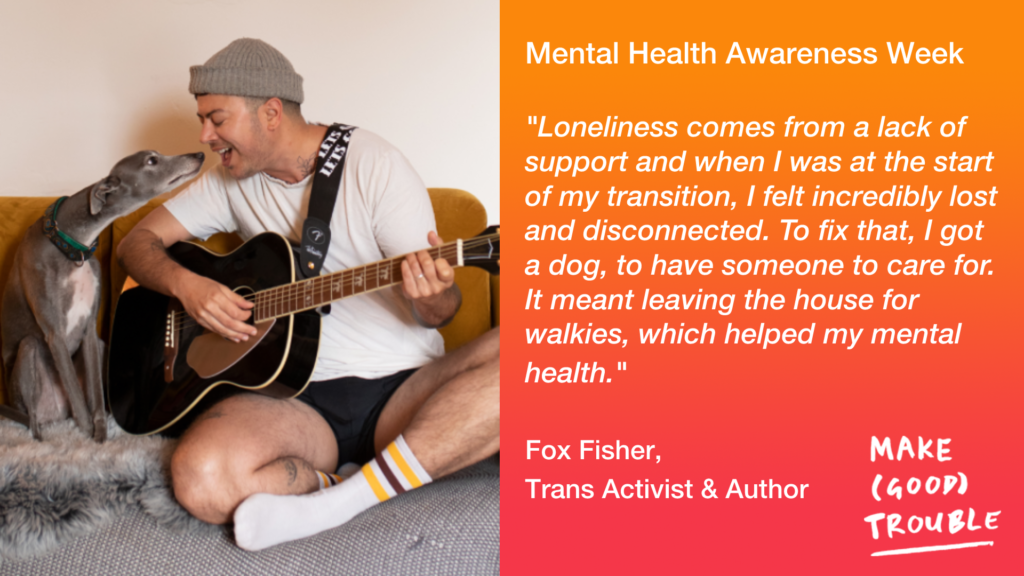
Loneliness can also come from lack of responsibility and sometimes human contact isn’t what we need. Pets can be very loving and calming to be around. Spending some quality time with animals has been proven to be therapeutic and can also give you a reason to get out into nature and explore your area.

You don’t even need to own a pet to enjoy the company of an animal, Borrow My Doggy is a great service where you can take other people’s dogs for walks! Getting all the benefits from time with an animal and getting outside which also has significant benefits to overall wellbeing and mental health. 

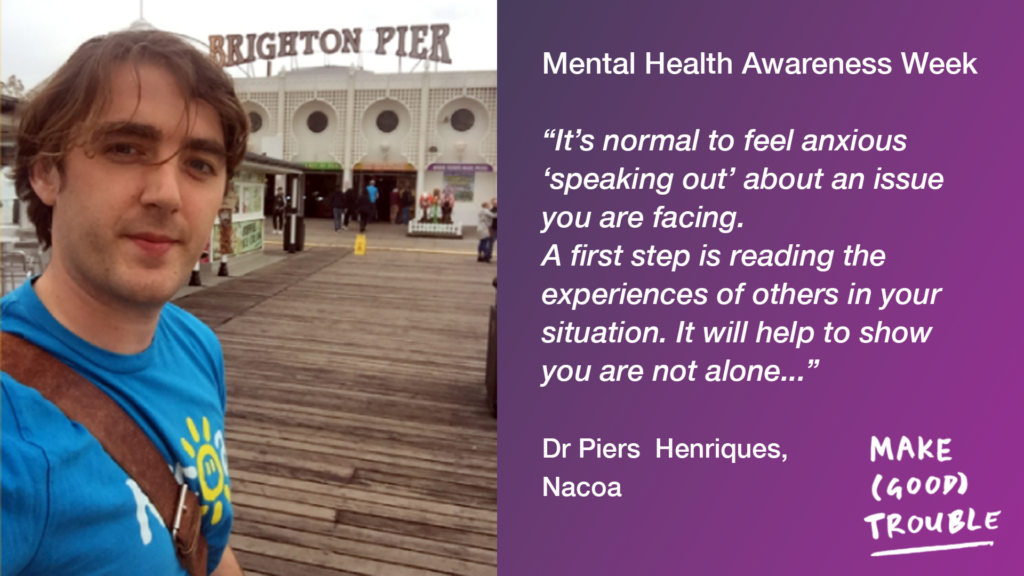
Having a supportive network or even one person that you trust and can be open with can be all it takes to pull you out of a loneliness hole. Maybe you are that person to someone, let them know you are here to chat or reach out first to start the conversation. There are also organisations such as Together Co who specialise in supporting people who deal with loneliness.

I remember doing this mindfulness practise a few months ago that involved writing letters of gratitude to people. I wrote what I was thankful for that person being in my life and how their presence and memories with them in my life has had an impact on me. It was wishy washy at first and some letters I never sent but it put a big smile on my face and helped me understand and appreciate the relationships I have/had with people. I definitely didn’t feel alone after writing those letters and felt so grateful to have those people in my life and it kind of made me want to go out into the world and make more connections. I also thought about the impact that I might’ve had on someone’s life that I don’t even realise or will ever know. It was pretty wild and eye opening. 

Smiling at people, it could make someone’s day showing some care, connection, optimism and love. It could be just what someone needs.

For further help & support

Listen to our episode of Raising Teens: loneliness on BBC Sounds

Our Help page with links to places that support people who are feeling lonely

www.meetup.com/ – an app that helps you connect with people and groups doing various activities in your local area.

We have a brand new four-part series of Raising Teens for you this February. You can catch it on BBC Radio Sussex, BBC Radio Surrey at 9pm every Monday in February. And on catch up on BBC Sounds. This series looks at some difficult but important subjects including teen safety, drugs, and the pressures young people feel that might induce them to run away from home. We look at the issues involved and our expert guests offer practical advice and tips for parents and teens looking for support.

In episode one, we discuss teen safety. We hear from young people with candid stories about their experiences of harassment, street crime, and how friends help each other to keep safe.

Our guests are Sergeant Joe Davis from Sussex Police; Sean Older, Senior Youth Worker for Trust for Developing Communities, and part of the Brighton Streets Project; and parent Suzanne Harrington. You can read a blog post about one aspect of this episode, of how young non-binary people are affected by street harassment.

Episode two looks at county lines. The Children’s Society describes county lines as “a form of criminal exploitation in which criminals groom and manipulate children into drug dealing. The ‘lines’ refer to the mobile phones that are used to control a young person who is delivering drugs often to homes outside their own county”. This topic was a real eye-opener for us. We hear from a young man who was drawn into drug dealing and has since taken the decision to help other young people to understand the issues and avoid the same fate that he experienced.

Our expert guests will look at the effects of county lines on families and communities, and discuss how parents can spot the warning signs of their child being groomed by a gang, and the support that is available. Guests are Lee Tully, Youth Worker; PC Keith Beckley from Sussex Police; and James Houghton, Director of Future Voices, a Training, Development and Consultancy organisation for those working with children who suffer exploitation/extra familial harm. 

Episode three is all about cannabis. We hear from young people who told us that they think cannabis has become “normalised” and a rising problem in Sussex. We discuss how cannabis affects the teenage brain, how young people can get help if they feel that cannabis is negatively affecting their life, whether cannabis should be legalised, and what support is available.

Guests are Carl Scott, qualified drug & alcohol support worker and founder of Project Youth; Luci Hammond, Adolescent Health Worker from RU-OK? a young people’s substance misuse & sexual health service for Brighton & Hove; and Sergeant Scott Gosling from Sussex Police.

Our final episode looks at the pressures young people might be under and what happens when that tips over into them running away from home. We speak to young people about their experiences – and they tell us candidly why they might think about not going home, and to the parent of a teenager who repeatedly ran away. She tells us how it affected her and her family and what steps she took to support her child.

Our guests are Paul Joseph, Head of Helplines at Missing People; Eli Adie, West Sussex Youth Hub Development Manager from YMCA Downslink Group; and Sergeant Scott Gosling from Sussex Police.

Raising Teens is hosted by presenter Guy Lloyd and includes teens’ own stories from Make (Good) Trouble’s young reporter Lola Ray, with additional reporting from Xenith Pocknell and Hamzah Ali. We hope you’ll join us at 9pm every Monday in February 2022 on BBC Radio SussexBBC Radio Surrey and BBC Sounds. 

“I’ll tend to go for more masculine looks when I’m going outside at night because I feel like that’s less of a target, but I feel like a lot of things need to be done because I shouldn’t be sacrificing my gender expression in order to be safe at night. […] I shouldn’t have to think about whether or not my keys can fit in my knuckles on the night. I should be able to go out at night. So should everybody else.”

By Xenith Pocknell

I spoke to a non-binary young person for series 4 of our radio show Raising Teens about their experience transitioning, how it affects how they perceive their own safety in the city and what being harassed feels like. The young person has been de-identified and will be referred to via they/them pronouns throughout this article.

The interview was powerful, moving and raised points that many of us in the binary world wouldn’t even consider. We spoke about their experience of how they present when they go outside, and how they feel about the public’s perception of them.

Most of us don’t consider this within our binary lives, the normalisation of having two distinct genders within our culture has resulted in those who feel outside of this having to choose between identities that they know don’t accurately represent them.

Raising Teens series 4 broadcasts at 9pm, Monday the 7th of February 2022 with our first episode “Safety in the City”. The show is hosted – as always – by Guy Lloyd talking to our guests, Sargent Joe Davis from Sussex Police (@sussexpoliceforce), Sean Older from Brighton Streets Project (@brightonstreets1) and mother of two Suzanne Harrington. You can watch the trailer for series 4 below.

Please be aware this article includes statistics that may be upsetting to some readers.

HARASSMENT

“It feels like having a massive target on my head for no reason […] that you didn’t really choose to have, just by existing.”

For those of us that haven’t experienced much street harassment, this concept of having a target on your head for no reason may seem alien, which is exactly how it makes you feel to be harassed in the first place, like an alien being drawn unwanted attention to because of how you dress, how you present yourself, how you talk.

All of us have experienced some level of harassment at some point, and if you’re struggling to picture what that feeling is like, think back to high-school, when the teacher would call on you to answer a question you didn’t know the answer to and the whole class looked at you, expectantly, waiting. Now imagine that feeling on a larger scale, you’re not in a warm classroom of your peers but you’re on the street walking to work or coming home after seeing your friends and a stranger yells at you about your appearance, expecting you to react to them in a positive way because they were ‘just giving you a compliment’.

The problems raised by street harassment won’t be solved by victim blaming and telling young people that their dress is to revealing or their skirt too short, or that if they want to be safe they should carry their keys between their fingers, these problems will be solved by educating those that harass in the first place.

Teach young people not to disrespectfully yell out to strangers on the street, and teach them to approach someone they might be interested in, ask about them calmly and – most importantly – teach them that ‘no’ is an acceptable answer and should stop whatever interaction prompts it instantly.

FEELING SAFE

“I know presenting as quite an androgynous person causes confusion for some people and I will get double takes, I’ll get whispers of ‘is that a boy or a girl?’ you know, the whole general stigma. I’ll tend to now present myself as either very strongly feminine or very strongly masculine in order to fit into those specific boxes to avoid the confusion, to avoid the harassment, which I wouldn’t normally have done before.”

40% of transgender people in the UK change how they dress when they go out, which increases to 52% for non-binary people, according to the Stonewall Trans report, 2018

Most of us can’t imagine how it feels to not be able to present yourself as your true identity. Those of us who are transgender and can ‘pass’ in the cisgendered community would not consider how difficult it is to have to choose between two identities that don’t represent us. We’re striving to achieve a look that matches the binary gender we know we are. Some of us may be forced into presenting in a way we don’t feel comfortable with. But we will never really know what it feels like to choose between two identities, neither of which match our own.

The looks you get whilst presenting as an androgynous person can be quite terrifying, it’s almost like they’re actively trying to label you as you walk past and when they can’t, it’s almost an expression of anger that crosses their face, as if to say; ‘How dare you not fit into my understanding of the binary’.

There is a long way to go before most people on the street will look at you with complete acceptance of you just existing there, rather than trying to judge how they should treat you based on their ill-conceived notions of gender.

LEARNING ABOUT HARASSMENT

“[My parents] didn’t really know, I don’t think they had the resources to educate me on it. Of course they want me to be safe, every parent and every carer wants their child to be safe, but I think there’s a lack of resources on what to do if your child is trans [and] how to keep your child safe.”

In 2019, MPs in the UK voted in favour of mandatory LGBTQ+ sex and relationship education in schools (538 in favour, 21 against)

There is no longer the fear that being taught about LGBTQ+ relationships and gender in school will ‘turn your child gay or trans’, which is a big step forward from Section 28 in 1988, a draconian piece of legislation which came into law in 1988 and effectively banned schools from discussing same sex relationships, which was finally repealed in 2000. The changes that have happened since were only brought about by education, which will still constantly need to be continued and updated to make sure we don’t fall back into harsh, unnecessary legislation.

It’s time all children were taught about the LGBTQ+ rights and the issues they have faced and still face today – even if they aren’t LGBTQ+ themselves – this education will give young people the language they need to be able to better understand themselves and the world around them, either leading to those who are LGBTQ+ being able to come into their identity easier, or for those who aren’t LGBTQ+ it will result in a decrease in phobia’s around things they don’t understand.

Our upcoming series of Raising Teens includes perspectives from the police, which is an institution that could still greatly benefit from education, which was a big issue for our young person.

MAKING CHANGES AND GETTING HELP

”I think the police need a bit more training in how to deal with hate crimes, how to deal with harassment, how to deal with even assault, and I feel like once that training has been completed, then we can have them as a constant presence […] until that training’s been done and until they’ve proven themselves that they do care about us, that they are fully invested in our safety, and once that trust has been restored between the entire LGBTQ+ community, then we can move on to what to do next”

Four out of five trans people in the UK have experienced some form of transphobic hate crime. Only one in seven reported this to the police, one in three did not report the crime for fear of transphobia from the police. (Galop: Trans Hate Crime Report, 2020)

While there are indeed many good people working within the police force to combat the discrimination we have seen historically, for many trans people a shiver of fear goes through them when a police car drives past. Many of us weren’t alive to witness the Stonewall riots which were started by people retaliating to police brutality and homophobia in 1969. The fear and tension from those riots caused the spark to ignite the fire that would become our 21st century rights as a community and is still felt by many of us today.

This fear and tension has lessened, but is still there and is felt in the hearts of many trans people today. The way forward is through training and education, not just for our school and our children, but for those who are supposed to be our first go-to when we are discriminated against.

While there is still some way to go, the future no longer looks as bleak for trans people. We have made a lot of slow, yet steady progress over the years and with the sex and relationship education reforms, it will be easier to teach love instead of fear.

”For any young trans person that’s listening to this, don’t take this as a sign to not go out at night, you should be allowed to go out and to have fun with your friends and to be safe at the same time. The acknowledgement of harassment and possible risks that may happen if you go out is simply a way for you to keep yourself safe […] don’t stop your life just because you’re scared of something happening […] just keep yourself safe and know what to do if something does happen.”

The goal is always to feel safe when you’re going out, and no one should have to experience feeling unsafe when they go out, but until we reach that goal we can educate, inform and reduce the risks people face when they’re out alone.

You can hear more from this young person on our upcoming episode “Safety in the City” on series 4 of Raising Teens. Watch the trailer below.

Raising Teens Series 4 – Official Trailer

For more information on where you can go if you need support, check out our help section.