Make (Good) Trouble: Start-Up of the Year nominee at the Brighton & Hove Business Awards
We’re chuffed to bits to announce that we’ve been shortlisted for Start-Up of the Year in the Brighton & Hove Business Awards. The winners are announced on 25 July, so fingers crossed! As a fledgling community interest company, we’ve worked our socks off in the last year to bring teen voices to the fore.
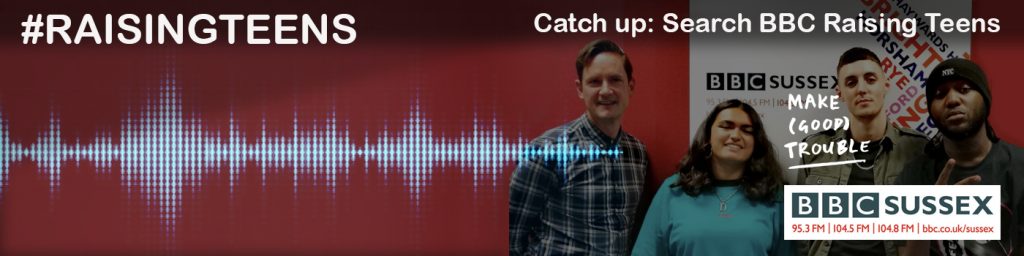
We’ve created a radio series, Raising Teens, for BBC Sussex and BBC Surrey that looked into how parents and teens can better communicate and understand each other – we’re currently gathering feedback from listeners to help us develop a second series.
We’ve been awarded a National Lottery Heritage Fund grant (with generous help from Gateways to the First World War) to explore attitudes to mental health in women now and back in the days of the First World War – watch this space for more news on this project! Plus we’re working on the development of a couple of big projects working with teens and schools.
If you’re free this Friday, Make (Good) Trouble’s Daisy Cresswell will speaking at the Brighton Chamber’s breakfast get together on Friday 28th June – you can get tickets here.
Once again mental health is on the front pages of the papers and it reminded me that our recently concluded radio series, Raising Teens, on BBC Sussex and BBC Surrey has highlighted the positive.
In episode after episode, the teenagers we spoke to showed themselves to be eloquent and possessing the language and knowledge to speak up about mental health. As one listener said of the teens featured in the show: “I love their optimism, their kindness and care.”
As our teen reporter, Lola, put it: “We will become more emotionally intelligent than past generations have ever been because we are able to express ourselves more openly and freely without shame or discouragement from our peers, adults or parents. I think we as a generation will become resilient because we are able to talk about [mental health] and communicate more openly.”
Raising Teens presenter Guy Lloyd and teen reporter Lola Ray
But it’s high time the rest of us caught up.The Children’s Commissioner, Anne Longfield, this week reported on the postcode lottery affecting children most in need. In a scathing report Longfield writes:
“The Prime Minister today called for all teachers to be trained to spot emerging mental health conditions in kids – I don’t think they have that much trouble spotting them; they have trouble finding anyone to treat them. I have called for a long time for a CAMHS professional to be available in every school. Now, on the day we hear that teenagers in Liverpool are being paid £1,000 to stab other kids and the Government publicly recognises that one in ten kids with a social worker lurches in and out of the service for 4-5 years, the PM calls for a twiddle to teacher training?”
This will just be heaping another responsibility on beleaguered teachers – today the OECD have published a report showing that teachers in England have longer working days than anywhere other than Japan. Here’s a thought – why not have teachers focus on what they do best: teach and inspire our children?
If you have listened to any of the shows, please let us know what you think in our very brief survey. Your feedback will help to shape our future projects – of which there are plenty in the pipeline (watch this space!) Thank you!
Now that our eight-part radio series, Raising Teens, is done and dusted, we’re gathering feedback to make sure that our next effort hits the mark. In this series we covered everything from school stress and sleep to resilience and body image, with parents, teens and experts discussing their experiences and offering tips and advice. If you missed any episodes, you can find them all here.
If you listened to any of the episodes, we’d be hugely grateful if you could spend a few minutes filling in our feedback survey below.
The new government White Paper on online harmswas published yesterday and aims to help protect young and vulnerable people from content that could cause harm online.
“The White Paper proposes establishing in law a new duty of care towards users, which will be overseen by an independent regulator. Companies will be held to account for tackling a comprehensive set of online harms, ranging from illegal activity and content to behaviours which are harmful but not necessarily illegal.”
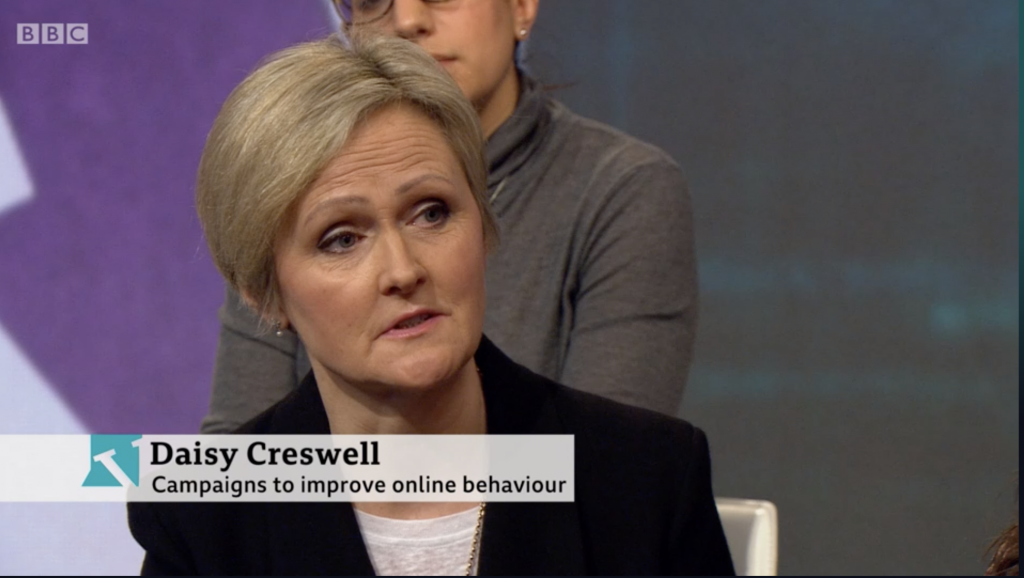
Make (Good) Trouble founder, Daisy Cresswell, and one of our teens, Grace (18), appeared on the Victoria Derbyshire show on BBC Two on Monday 8 April to talk about the issues raised by the White Paper. It’s never easy to distil such a huge subject into sound bites, but Grace argued that whilst she’s seen things online that have shocked her, relating to suicide and self harm, she said: “Because it’s an open space to put out whatever you want, I think it’s more about teaching young children and teens and adults how to cope with what you’re seeing and teaching them how to talk about it rather than trying to get rid of it. I think it’s important to address what we’ve already seen before we just try to ban everything.”
Make (Good) Trouble founder, Daisy Cresswell, speaking on Victoria Derbyshire, BBC Two
The next generation are the ones who will live, breathe and shape this technology and we should be listening and engaging with them about this subject. Many teens have found places to get help online with issues relating to mental health such as self-harm and depression. Often they find it difficult to talk to someone they know.
So whist we welcome the discussion that the White Paper has raised, we feel that it doesn’t address the issues that are at the root of the mental health crisis in our youth.
It begs the question: why are our children turning to the internet to look for harmful content in the first place? Emma Oliver’s son took his own life after searching online for ways to do so. She said, “The internet is probably their last resort [to find out] how to go on to kill themselves because of waiting lists. People forget, children do want to talk. They’ve been referred to services and the waiting list is that long that they see no other way out. I know a child that’s been waiting for 6 months for counselling – 6 months is a long time – he goes on to tell me that he feels no one cares so he goes on the internet because he feels he can’t take it any more… the government should try and look at the root cause of it as well…” (Victoria Derbyshire show, BBC Two)
When it comes to implementation of laws, who decides what content is harmful? How will smaller companies compete with the Facebooks and Googles of this world who can afford an army of moderators to police content and who could arguably afford fines for non-compliance? How long will it take to feasibly bring any of this on to the statute books?
So whilst we agree that there’s a need to address worst excesses online content, we also need to help our young people right now. We need to have better provision for looking after their mental health and to build resilience within them – and we can only do that by working with and providing support and resources for teens, parents and schools.
We use cookies on our website to give you the most relevant experience by remembering your preferences and repeat visits. By clicking “Accept All”, you consent to the use of ALL the cookies. However, you may visit "Cookie Settings" to provide a controlled consent.
This website uses cookies to improve your experience while you navigate through the website. Out of these, the cookies that are categorized as necessary are stored on your browser as they are essential for the working of basic functionalities of the website. We also use third-party cookies that help us analyze and understand how you use this website. These cookies will be stored in your browser only with your consent. You also have the option to opt-out of these cookies. But opting out of some of these cookies may affect your browsing experience.
Necessary cookies are absolutely essential for the website to function properly. These cookies ensure basic functionalities and security features of the website, anonymously.
Cookie
Duration
Description
cookielawinfo-checkbox-analytics
11 months
This cookie is set by GDPR Cookie Consent plugin. The cookie is used to store the user consent for the cookies in the category "Analytics".
cookielawinfo-checkbox-functional
11 months
The cookie is set by GDPR cookie consent to record the user consent for the cookies in the category "Functional".
cookielawinfo-checkbox-necessary
11 months
This cookie is set by GDPR Cookie Consent plugin. The cookies is used to store the user consent for the cookies in the category "Necessary".
cookielawinfo-checkbox-others
11 months
This cookie is set by GDPR Cookie Consent plugin. The cookie is used to store the user consent for the cookies in the category "Other.
cookielawinfo-checkbox-performance
11 months
This cookie is set by GDPR Cookie Consent plugin. The cookie is used to store the user consent for the cookies in the category "Performance".
viewed_cookie_policy
11 months
The cookie is set by the GDPR Cookie Consent plugin and is used to store whether or not user has consented to the use of cookies. It does not store any personal data.
Functional cookies help to perform certain functionalities like sharing the content of the website on social media platforms, collect feedbacks, and other third-party features.
Performance cookies are used to understand and analyze the key performance indexes of the website which helps in delivering a better user experience for the visitors.
Analytical cookies are used to understand how visitors interact with the website. These cookies help provide information on metrics the number of visitors, bounce rate, traffic source, etc.
Advertisement cookies are used to provide visitors with relevant ads and marketing campaigns. These cookies track visitors across websites and collect information to provide customized ads.